If you or someone you care for has noticed toenails becoming harder, thicker, and more difficult to trim, you are far from alone. Thick toenails in elderly adults are one of the most common — and least talked about — foot care challenges that come with aging.It can start gradually. The nails look a little …


The good news is that most cases of thick toenails in seniors are very manageable. With the right softening routine, the right tools, and a little patience, nail care can become a much gentler experience. And for more severe cases, knowing when to involve a podiatrist makes all the difference.
This guide walks through everything — causes, warning signs, safe trimming steps, effective treatments, and the products that can genuinely help. Let's start with what's actually happening inside those nails.
What Causes Thick Toenails in Elderly Adults?
Understanding what causes thick toenails in elderly adults helps take away some of the worry — and points toward the right solution. There is rarely a single cause. Usually, a few factors are working together over many years.
Aging and Slower Nail Cell Turnover
As we age, the rate at which toenail cells regenerate slows significantly. Instead of shedding evenly, older nail cells accumulate and compress, causing the nail plate to thicken over time. This is a natural part of aging, not a sign that something is seriously wrong.
Reduced Circulation
Good blood flow feeds the nail bed. When circulation to the feet decreases — which is common in older adults, especially those who are less active — nails can become thicker, slower-growing, and more prone to changes in texture and color.
Years of Shoe Pressure
Decades of wearing shoes that were slightly too narrow, too short, or simply not designed for foot health quietly traumatize the nail bed. That cumulative pressure encourages thickening as a protective response.
Arthritis and Reduced Self-Care
When arthritis makes bending painful and hand strength decreases, toenails simply don't get trimmed as often as they should. Overgrown nails press against shoes, get bumped more often, and thicken further over time.
Repeated Nail Trauma
Even minor, repeated impacts — stubbing a toe, the nail pressing against a shoe during walking — can cause ongoing low-level trauma to the nail matrix (the growth center of the nail). Over the years, this can permanently change how the nail grows.
Diabetes
Diabetes affects circulation and nerve sensation in the feet. It also makes nails more vulnerable to infections and structural changes. Thick toenails in seniors with diabetes deserve particular attention and, in many cases, professional care rather than DIY trimming.
Fungal Infections
Fungal infections (onychomycosis) are a common cause of thickened, discolored toenails. They are highly treatable, though treatment takes time. However — and this is important — not all thick toenails are caused by fungus.
Psoriasis and Other Skin Conditions
Psoriasis can affect nails just as it affects skin, causing pitting, thickening, and separation from the nail bed. Other conditions like lichen planus can also change nail structure.
Thick Toenails Not Fungus — Other Possible Causes
One of the most common concerns people have is whether thick nails automatically mean a fungal infection. The honest answer: thick toenails are not always caused by fungus.
While fungal infections are one common cause, nails can become thick due to:
- Age-related keratin buildup — keratin is the protein that makes up nails, and it can accumulate without any infection present
- Old nail trauma — a nail that was injured years ago may permanently grow thicker
- Poor circulation — reduced blood flow changes how nails grow
- Psoriasis — a skin condition that affects nail structure
- Chronic shoe pressure — years of narrow footwear compressing the nail bed
- Genetics — some people are simply predisposed to thicker nails
If you are unsure of the cause, a podiatrist can usually identify it quickly. This matters because the treatment differs — antifungal products won't help nails that are thick due to circulation or trauma.
Signs and Symptoms of Thickened Toenails in Elderly Seniors
Recognizing the changes early helps you respond before small issues become bigger ones. Here are the most common signs of thickened toenails in elderly adults:
- Yellow or brown discoloration — one of the earliest visible changes; thick yellow toenails in elderly adults often indicate keratin buildup or fungal involvement
- Increased nail height — the nail appears to grow upward rather than forward
- Curved or pincer nails — nails that curve inward at the sides, pressing into the surrounding skin
- Ram's horn nails (onychogryphosis) — an extreme thickening and curving that resembles a ram's horn; more common in very elderly adults with long-term neglect
- Crumbling or brittle edges — nails that flake or crack when pressure is applied
- Subungual debris — a build-up of white or yellowish material under the nail
- Shoe discomfort — pain or pressure on the toes even in well-fitting footwear
- Ingrown nails — thickened nails are harder to trim straight and more likely to grow into the surrounding skin
Thick toenails in old age don't always cause pain — but when they do, addressing the issue promptly protects both comfort and mobility.
Why Thick Toenails Can Be Dangerous for Seniors
This is more than a cosmetic concern. For older adults, especially those with certain health conditions, thickened toenails can have real consequences for safety and overall health.
Pain That Changes How You Walk
When toenails cause discomfort, people naturally adjust their gait — even without realizing it. Walking differently to avoid pain on one toe can affect balance, increase joint strain, and significantly raise the risk of falls. For seniors, a fall carries serious consequences.
Pressure Sores and Skin Breakdown
Curved or thickened nails pressing against adjacent toes or shoe material can cause pressure sores. These small wounds can be slow to heal, especially in older skin.
Infections
Breaks in the skin near thickened or ingrown nails are entry points for bacterial infection. What begins as a small irritation can develop into cellulitis or, in severe cases, require medical intervention.
⚠️ Important — Diabetes, Neuropathy, and Poor Circulation:
If you or your loved one has diabetes, peripheral neuropathy, or poor circulation, thick or ingrown toenails require extra caution. Reduced sensation means injuries may not be felt. Reduced circulation means wounds heal more slowly. These conditions significantly increase the risk of serious complications from even minor nail-related injuries. Professional podiatry care is strongly recommended rather than home trimming.
How to Soften Thick Toenails Before Cutting
This is the step that most people skip — and it makes the biggest difference. Trying to trim thick, dry nails without softening them first is how nails crack, split, and cause injury. A short softening routine turns a difficult job into a manageable one.
Warm Water Soak
Soaking the feet in warm (not hot) water for 10 to 15 minutes softens the nail plate and the surrounding skin. This alone can make trimming significantly easier. The water should be comfortably warm — test with your elbow or wrist first.
Epsom Salt Addition
Adding Epsom salt to the soak helps reduce inflammation and softens nail tissue further. It also has a gentle cleansing effect on the skin around the nail. Around two tablespoons per gallon of water is a comfortable amount.
Urea Cream for Ongoing Softening
For nails that are genuinely very thick, a urea cream applied regularly between trimmings can make a meaningful difference. Urea is a compound that breaks down the keratin protein that makes nails hard, gradually softening the nail plate over time.
🧴 Recommended: Ebanel Urea Cream 40% + Salicylic Acid
A 40% urea concentration is one of the most effective over-the-counter options for softening very thick toenails. The added salicylic acid helps break down built-up keratin more efficiently. Many seniors and caregivers find that applying this cream to the nails and covering with a sock overnight makes trimming noticeably easier the next morning. It's a small step that reduces both the effort and the risk of nail splitting during cutting.
Best Foot Soaks for Thick Toenails
For an effective soak routine, a dedicated foot basin makes the process more comfortable and consistent — especially for seniors who find balancing over a bathtub challenging.
- Epsoak Epsom Salt — a highly rated, pure magnesium sulfate option widely used for foot soaks
- Tea Tree Oil (a few drops added) — has natural antifungal and antibacterial properties; helpful when fungal involvement is suspected
A comfortable foot basin at the right height removes the need to bend or stretch. Check our recommendations in our guide on the best foot soak for elderly loved ones.
How to Cut Thick Toenails in Elderly Adults Safely
Safe nail cutting starts with preparation and the right tools. Here is a practical step-by-step approach for cutting thick toenails in elderly adults — whether you are doing it yourself or helping someone else.
Step 1 — Soak Nails for 10–15 Minutes
Featured Answer — How to cut very thick toenails:
The most effective approach is to soak the feet in warm water for 10–15 minutes first, then use wide-jaw toenail clippers to trim the nail in small, straight-across sections. Avoid cutting large pieces at once, as this increases the risk of splitting and injury.
Never skip the soak. Even 10 minutes makes the nail measurably more pliable. Dry, thick nails shatter rather than cut cleanly — which can cause jagged edges, nail cracking deep into the nail bed, and discomfort.
Step 2 — Use Wide-Jaw Toenail Clippers
Standard nail clippers are simply not designed for the thickness of elderly toenails. Using undersized clippers means applying far more force — which increases the risk of the nail cracking, slipping, or cutting surrounding skin.
Wide-jaw clippers, designed specifically for thicker nails, do the job with far less effort and much better control. This is one of the most impactful upgrades available for how to cut thick toenails in elderly adults safely.
✂️ Best Overall: FERYES Wide Jaw Opening Toenail Clippers
These clippers feature a 15mm jaw opening — wide enough to get proper purchase on thick nails without needing to force the blades. The design requires less hand strength, making them noticeably easier for seniors with mild arthritis. The sharp stainless blades cut cleanly rather than crushing the nail, which reduces cracking and splitting. A consistently well-reviewed choice for home foot care.
✂️ Runner-Up: RONAVO Podiatrist Toenail Clippers
When nails are severely thickened, curved into a ram's horn shape, or significantly overgrown, a podiatrist-style clipper with extra leverage gives better control. The RONAVO clippers are designed for exactly these situations — offering the precision needed for awkwardly shaped nails without requiring excessive force.
Step 3 — Cut in Small, Straight-Across Sections
This step matters more than most people realize. Rather than trying to cut across the entire nail in one motion, make several small cuts from one side to the other. Each cut should only remove a small piece.
Why this approach helps:
- Reduces the force needed per cut
- Prevents the nail from cracking or splitting down toward the nail bed
- Lowers the risk of ingrown nails
- Gives better control over the final nail shape
Always cut straight across — not curved at the corners. Rounding the corners encourages nails to grow into the surrounding skin.
Step 4 — Smooth Edges with a Nail File or Electric Grinder
After cutting, there will often be rough edges that can snag on socks or scratch surrounding skin. A nail file or electric nail grinder smooths these down safely.
For seniors with reduced hand steadiness, low vision, or significant arthritis, an electric nail grinder is often a safer option than a manual file. The rotating head removes material gradually and gently, without the back-and-forth motion of a file that can be harder to control.
⚡ Recommended: Smart Electric Nail Grinder for Seniors (LED Models)
LED-equipped electric nail grinders illuminate the nail while filing — a practical feature for seniors with low vision or those working in less-than-ideal lighting. The variable speed settings allow for a gentle, controlled approach. Many caregivers find this tool particularly helpful when the senior has shaky hands or is sensitive to the pressure of manual filing. It reduces accidental nicks significantly.
💡 The “Caregiver's Grip” Technique
If you are helping a parent or loved one trim thick toenails, try this practical approach: gently stabilize the toe by holding the sides of the toe pad rather than pressing directly on the nail. This gives you better control over the nail position while minimizing discomfort for the person receiving care. Pressing down on the nail itself can cause pain, especially if the nail bed is sensitive — holding the sides supports the toe without adding pressure where it hurts most. Many experienced caregivers and home health aides use this technique instinctively once they've tried it.
Best Option for Seniors Who Cannot Bend Down
For seniors managing back pain, arthritis, post-hip surgery recovery, or any condition that limits how far they can reach, standard toenail clippers require a level of flexibility that simply isn't there. Straining to reach the toes is both uncomfortable and unsafe.
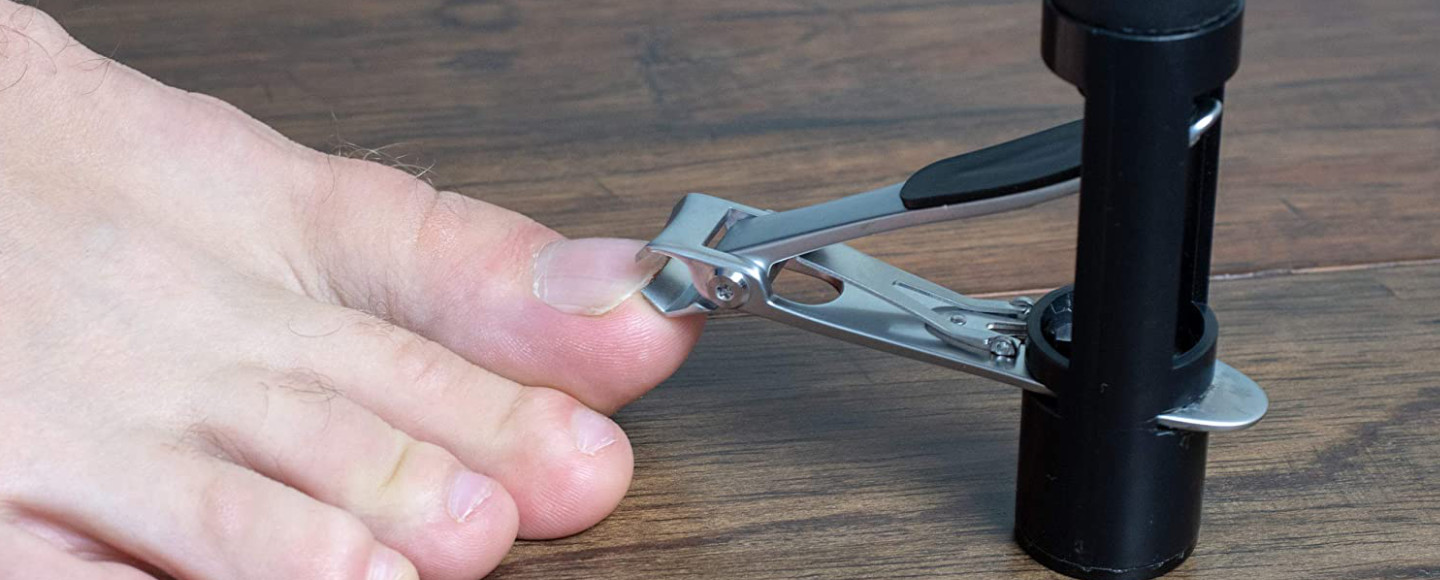
Long-handled toenail clippers extend your reach significantly, allowing nail care to happen without any bending — and without needing someone else's help for every session.
🦯 Recommended: Scalebeard Long Handled Toenail Clippers
These clippers are specifically designed for seniors who find bending painful or impossible. The extended handle brings the cutting mechanism to the toenail without requiring the user to flex forward. They are especially helpful after hip replacement surgery, for those with significant arthritis, obesity, or chronic back pain. This is one of the tools that genuinely supports continued independence in daily personal care.
When Seniors Should Not Cut Their Own Toenails
Home nail care works well for many seniors — but not all situations are safe for DIY trimming. Here are the circumstances where professional podiatric care is the safer path:
- Diabetes — even a small nick or pressure sore can develop into a serious wound when circulation and wound healing are compromised
- Peripheral neuropathy — reduced sensation in the feet means injuries may not be noticed until they have already become infected
- Bleeding disorders or blood thinners — any minor cut carries a higher risk of excessive bleeding
- Severe arthritis — when hand tremors or grip weakness make controlled cutting genuinely difficult
- Significant vision impairment — cutting nails accurately without being able to see clearly increases the risk of cutting skin
- Severely thickened, curved, or ram's horn nails — these often require professional tools and technique to address safely
- Signs of active infection — redness, swelling, warmth, or discharge around the nail always warrant professional evaluation before any home trimming
⚠️ Important: If any of the above apply, professional podiatry care is the safest option. Many Medicare and supplemental insurance plans cover podiatry visits for medically necessary nail care. It is worth checking your coverage.
How to Treat Thick Toenails in Elderly Adults
Understanding how to treat thick toenails in elderly adults depends largely on what is causing them. Here is a practical overview of the options available, from home care to clinical treatments.
Home Remedies and Ongoing Foot Care
For age-related thickening without infection, consistent home care is often sufficient to manage the condition comfortably. The most effective treatment for thickened toenails at home includes:
- Regular moisturizing — applying a urea-based or thick emollient cream to the nails and surrounding skin daily keeps nail tissue more supple and less prone to cracking
- Consistent foot hygiene — washing and thoroughly drying the feet, including between the toes, reduces the environment in which fungal infections develop
- Diluted white vinegar soaks — soaking the feet in a mixture of one part white vinegar to two parts warm water several times a week has mild antifungal properties and can help manage early-stage fungal involvement
- Breathable footwear — shoes with wide toe boxes and breathable materials reduce pressure and moisture, both of which worsen nail thickness and fungal growth
- Trimming on a regular schedule — nails left to overgrow become harder to manage; trimming every 6–8 weeks prevents buildup
Antifungal Treatments
When fungal infection is confirmed (or strongly suspected), targeted treatment is needed. Options include:
- Over-the-counter antifungal creams and lacquers — products containing clotrimazole or undecylenic acid applied directly to the nail; these can be effective for mild to moderate infections but require consistent use over several months
- Medicated nail lacquers — prescription-strength options like ciclopirox lacquer are applied like nail polish and gradually treat the infection from the outside
- Oral antifungal medications — for moderate to severe fungal nail infections, a doctor may prescribe terbinafine or itraconazole; these are more effective than topical treatments but require monitoring for side effects
- Laser treatment — a newer option available through some podiatry clinics; laser energy targets the fungus without damaging surrounding tissue
It is worth noting that fungal nail infections respond slowly to treatment — even with appropriate medication, visible improvement can take 6 to 12 months because nails grow slowly.
Podiatrist Treatments
A podiatrist has access to tools and techniques that go well beyond what is possible at home. Professional options include:
- Nail debridement — thinning the nail with a rotary tool to reduce thickness; this is often done alongside antifungal treatment
- Medical trimming — precise, safe trimming of severely thickened or ram's horn nails that would be unsafe to attempt at home
- Partial or full nail removal — in cases where nails are causing recurring problems, a podiatrist can remove the nail under local anesthetic; the nail may or may not grow back depending on the approach used
Can Thick Toenails Be Reversed?
This is one of the most common questions people ask — and it deserves an honest answer. Can thick toenails be reversed? The short answer is: it depends on the cause.
- If the cause is fungal infection — yes, with appropriate and consistent antifungal treatment, the nail can gradually return to a more normal appearance as it grows out. This process takes time — typically 6 to 18 months for full results. Patience and consistency are essential.
- If the cause is age-related keratin buildup — the changes are largely structural and may not fully reverse. However, regular softening, moisturizing, and trimming can significantly improve comfort and appearance.
- If the cause is old nail trauma — nails damaged at the matrix often grow permanently thicker. Management is about making them comfortable, not necessarily returning them to their original state.
- If the cause is poor circulation or a systemic condition — addressing the underlying condition (better circulation, controlled blood sugar, managed psoriasis) can slow progression and sometimes improve nail quality over time.
The most realistic and helpful framing is this: in many cases, thickened toenails in elderly adults can be managed effectively and comfortably — even if complete reversal isn't possible. The goal is pain-free, safely trimmed nails that don't interfere with daily life. That is achievable for most people.
Top Products That Help Thick Toenails in Seniors
The right tools make an enormous difference. Here is a consolidated overview of what actually helps — organized by category.
Best Toenail Clippers for Thick Nails
FERYES Wide Jaw Opening Toenail Clippers
The wide jaw opening and sharp stainless blades are well-suited for thickened nails. Less hand strength required. A good starting point for most seniors with moderately thick nails.
RONAVO Podiatrist Toenail Clippers
Better for severely thickened, curved, or ram's horn nails where precision and leverage are both needed. The design mimics the tools used in a podiatry office.
🛒 Shop FERYES on Amazon
🛒 Shop RONAVO on Amazon
Best Electric Nail Grinders
LED-equipped electric nail grinders are the safest finishing tool for seniors with arthritis, shaky hands, or low vision. They smooth rough nail edges gently and gradually, with no risk of the sharp snag that a coarse nail file can create. Variable-speed models allow you to start slowly and adjust as needed.
🛒 Shop Electric Grinder on Amazon
🔍 Shop on Walmart
Best Nail Softening Creams
Ebanel Urea Cream 40% + Salicylic Acid — high-concentration urea designed to break down keratin buildup; widely used by seniors and podiatrists alike for pre-trim softening.
Miracle of Aloe Toenail Soft — a gentler urea-based option for those with sensitive skin; effective for regular maintenance moisturizing between trimmings.
🛒 Shop Softening Creams on Amazon
🔍 Shop on Walmart
Best Foot Soaks
Epsoak Epsom Salt — pure magnesium sulfate in resealable bags; a staple for regular foot soaking routines. Tea tree oil can be added in small amounts for extra antifungal benefit.
🛒 Shop Epsoak on Amazon
🔍 Shop on Walmart
Best Shoes for Seniors with Thick Toenails
Shoe choice directly affects nail health. For seniors managing thickened toenails, look for:
- Wide toe boxes — gives the toes room without compression
- Diabetic shoes — specifically designed to eliminate pressure points; often deeper in the toe area
- Extra-depth shoes — accommodate orthotic insoles and thicker toe profiles without pressure
For specific recommendations, see our guides to the Best Shoes for Elderly Balance Problems, Best Shoes for an 80-Year-Old Woman, and Best Walking Shoes for Seniors.
The Ultimate Senior Foot Care Bundle
If you are setting up a complete, reliable foot care routine from scratch — or putting together a thoughtful gift for an aging parent — here is a practical starter kit that covers every step of the process:
- Soften: Ebanel Urea Cream 40% — applied to nails regularly to reduce hardness
- Soak: Epsoak Epsom Salt + a comfortable foot basin — 10–15 minutes before trimming
- Trim: FERYES Wide Jaw Toenail Clippers — clean cuts with less effort
- Finish: LED Electric Nail Grinder — smooth edges safely, even with shaky hands
Approximate total investment: under $75. That covers everything needed for a safer, more comfortable foot care routine at home — and reduces the frequency of expensive podiatry visits for routine maintenance.
🛒 Shop the Full Bundle on Amazon
🔍 Shop on Walmart
When to See a Podiatrist Immediately
Some situations call for professional care right away — not next week, not after trying a few home remedies. Please seek podiatric evaluation promptly if you notice any of the following:
- Bleeding from under or around the nail without a clear injury
- Swelling or redness extending beyond the nail area
- A foul or unusual odor coming from the toe
- Black or very dark nails — this can indicate blood under the nail or, in rare cases, a more serious condition
- Severe or worsening pain that interferes with walking
- Any open wound or sore near the nail — especially in seniors with diabetes or poor circulation
- Fever alongside nail symptoms — which may indicate the infection has spread
⚠️ For seniors with diabetes: Any wound, blister, or infection near the feet warrants same-day or next-day medical attention. Do not wait to see if it resolves on its own.
Tips to Prevent Thick Toenails in Seniors
Prevention is much easier than treatment. These habits can slow the development of thick toenails in old age and reduce the risk of complications:
- Wear shoes that fit properly — there should be about a thumb's width of space between the longest toe and the end of the shoe; avoid narrow, pointed, or rigid toe boxes
- Trim nails regularly on a schedule — every 6–8 weeks prevents nails from becoming overgrown and difficult to manage
- Keep feet clean and dry — wash daily, dry thoroughly especially between the toes, and change socks daily
- Moisturize feet and nails regularly — apply cream to the feet and nails after bathing; this keeps skin supple and reduces nail brittleness
- Wear breathable socks and footwear — moisture-wicking socks and ventilated shoes reduce the warm, damp environment that encourages fungal growth
- Check feet regularly for early changes — especially for seniors with diabetes or circulation problems; a small hand mirror or a caregiver's help can make this easier
- Address health conditions that affect circulation — managing blood sugar, staying as active as safely possible, and following medical advice for vascular health all benefit nail quality indirectly
For our full guides on diabetic foot care, neuropathy management, and the best footwear for foot health, visit the SeniorCouch Foot Care Hub.
Frequently Asked Questions About Thick Toenails in Elderly Adults
Why do toenails get thicker with age?
As we age, the rate at which nail cells turn over slows down. Instead of shedding evenly, nail cells accumulate and compress, forming a thicker nail plate. Reduced circulation, years of footwear pressure, and repeated minor trauma all contribute to this process over decades. It is a normal part of aging, though it can be managed effectively with the right care routine.
Are thick yellow toenails always fungus?
No. While a fungal infection is a common cause of thick yellow toenails in elderly adults, yellowing and thickening can also result from age-related keratin buildup, psoriasis, old nail trauma, poor circulation, and even long-term use of nail polish. A podiatrist can identify the cause with a simple examination or nail culture test.
How do you cut very thick toenails?
The most effective approach is to soak the feet in warm water for 10–15 minutes to soften the nail, then use wide-jaw toenail clippers to trim the nail in small, straight-across sections — never large cuts at once. Finish by smoothing rough edges with a nail file or electric grinder. For severely thickened nails, a podiatrist visit is recommended first.
What softens thick toenails fast?
A 10–15 minute warm water soak with Epsom salt provides the fastest short-term softening before a trim. For ongoing management between trims, a high-concentration urea cream (such as 40% urea) applied nightly and covered with a sock overnight is one of the most effective approaches for gradually softening very thick nails.
Can poor circulation cause thick toenails?
Yes. The nail bed requires consistent blood flow to grow normally. When circulation to the feet is reduced — which is common with age, diabetes, peripheral artery disease, or inactivity — nails can become thicker, more brittle, and slower-growing. Improving circulation through activity, appropriate medical management, and footwear choices can help slow nail thickening.
Is it safe for seniors to cut thick toenails at home?
For most seniors in good general health, home nail care is safe when the right tools and techniques are used. The main exceptions are seniors with diabetes, neuropathy, poor circulation, bleeding disorders, severe arthritis, or significant vision impairment — in these cases, professional podiatric care is the safer choice for routine nail maintenance.
Can thick toenails be reversed?
It depends on the cause. Fungal-related thickening can often improve over 6–18 months with consistent antifungal treatment as new nail grows in. Age-related or trauma-related thickening may not fully reverse, but consistent softening, moisturizing, and trimming routines can make nails significantly more comfortable and manageable over time.
When should elderly thick toenails be treated by a podiatrist?
Podiatric care is recommended when there is significant pain, any signs of infection (redness, swelling, discharge, odor), nails that are too thick or curved to trim safely at home, ram's horn nail formation, or when the senior has diabetes, neuropathy, or poor circulation. Medicare and many supplemental plans cover medically necessary podiatry visits.
A Final Word
Thick toenails are one of those challenges that can quietly affect quality of life in ways that are easy to underestimate — until the right shoes become uncomfortable, walking becomes tentative, or trimming day feels like a struggle.
The good news is that what helps thick toenails in elderly adults is straightforward: soften first, use the right tools, trim carefully, and moisturize consistently. For most people, these steps together make a genuine and lasting difference.
If you are unsure where to start, the Ultimate Senior Foot Care Bundle offers everything in one place for under $75 — a reasonable investment in daily comfort and independence.
And when in doubt, a single podiatry visit can clarify the cause, safely address what needs immediate attention, and give you a clear plan going forward. That confidence is worth a great deal.
For more guidance on senior foot health, see our related guides: Best Shoes for Elderly Balance Problems, Best Diabetic Socks for Seniors, Best Foot Basins for Seniors, and the full SeniorCouch Foot Care Hub.