📋 In This Guide Why Elderly Toenails Become Thick and Difficult to Cut Signs Thick Toenails Need Extra Care How to Soften Toenails Before Cutting Best Tools for Cutting Thick Elderly Toenails Step-by-Step Guide to Cutting Thick Elderly Toenails How to Cut Overgrown Toenails at Home Toenail Cutting Safety Tips for Seniors With Diabetes When …


If you or someone you care for has been putting off toenail trimming because the nails have become thick, stubborn, or painful to deal with — you are far from alone.
Cutting thick elderly toenails is one of the most common challenges families and caregivers quietly struggle with. What once took a minute now feels complicated, uncomfortable, and even a little intimidating.
Maybe the nails have yellowed. Maybe they've started to curve. Maybe bending down has become harder, or gripping regular clippers causes too much strain on arthritic hands. These are real, everyday experiences — and there is nothing embarrassing about them.
The good news is that safe, comfortable toenail care at home is absolutely possible — with the right preparation, the right tools, and a calm, patient approach.
This guide walks you through everything: why elderly toenails thicken with age, how to soften them before trimming, which tools work best, and a clear step-by-step process that works well for both seniors and caregivers. We also cover important safety information for people managing diabetes or circulation concerns.
Whether you are trimming your own nails or helping a loved one, this guide will help you do it safely and confidently — without the struggle.
Why Elderly Toenails Become Thick and Difficult to Cut
Thick toenails in older adults are not a sign of poor hygiene or neglect. They are largely a natural result of how the body changes with age — and several common health conditions can speed up the process.
Understanding why this happens makes it easier to manage — and helps you choose the right approach when it is time to trim.
Slower Nail Growth and Reduced Blood Flow
As we get older, blood circulation to the feet naturally decreases. This slows nail growth and changes the nail's texture and density. Nails that grow slowly tend to accumulate layers of keratin over time, becoming progressively thicker and harder.
Fungal Toenail Infections
Toenail fungus — medically called onychomycosis — is one of the most common causes of thickened, discolored, or brittle nails in seniors. Fungal infections thrive in warm, moist environments (like inside shoes) and become increasingly common with age because the immune system is less effective at fighting them off.
Signs of a fungal nail infection include:
- Yellow, brown, or white discoloration
- Nails that crumble or break easily
- A slight odor from the affected nail
- The nail separating from the nail bed
Onychogryphosis — Ram's Horn Nails
Onychogryphosis — sometimes called ram's horn toenails — is a condition where the toenail thickens dramatically and curves, often resembling a curved horn or claw. It is most common in the big toenail and tends to develop when nails go untrimmed for extended periods, often due to limited mobility or difficulty reaching the feet.
Ram's horn nails require careful, staged trimming and often benefit from professional podiatry care.
Repeated Pressure From Footwear
Years of wearing tight or ill-fitting shoes creates ongoing pressure on the toenails, which can cause them to thicken as a protective response. This is particularly common in the big toe.
Arthritis and Reduced Mobility
Arthritis — especially in the hands, hips, or back — can make it physically painful or impossible to reach the feet for regular trimming. When nails are not trimmed consistently, they naturally grow thicker and harder over time. Peripheral neuropathy — nerve damage that reduces feeling in the feet — can also mean that nail changes go unnoticed until they have advanced significantly.
Psoriasis and Other Skin Conditions
Certain skin conditions, including psoriasis, can affect nail structure and contribute to thickening, pitting, or separation from the nail bed.
💡 Key Takeaway: Thick toenails in older adults are almost always the result of aging, health conditions, or reduced mobility — not carelessness. The right tools and approach make all the difference.
Signs Thick Toenails Need Extra Care
Not all thick toenails are the same. Some can be managed carefully at home; others genuinely need professional attention. Here are the signs to watch for before you begin.
- Yellow, brown, or white discoloration — may indicate fungal infection
- Nails that curve inward or downward — increased risk of piercing the surrounding skin
- Pain while walking or wearing shoes — the nail may be pressing on soft tissue
- Crumbling or brittle texture — nails that break in jagged pieces during trimming
- Nails growing into surrounding skin — a sign of an ingrown toenail
- Redness, swelling, or warmth around the nail — may indicate infection
- Extremely thick or curved nails (ram's horn shape) — likely need podiatry care first
⚠️ Important: Do not attempt aggressive trimming if the nail is severely curved, infected, or causing pain. In these cases, a podiatrist is the safest option — and a visit can prevent serious complications, especially for seniors with diabetes or circulation concerns.
How to Soften Toenails Before Cutting
This step alone can make the difference between a smooth, comfortable trim and a painful, frustrating experience. Thick toenails should never be cut when they are dry and brittle — they can crack, split, or shatter in unpredictable ways that leave sharp edges and cause injury.
Softening the nails first makes them more pliable and much easier to cut cleanly.
Warm Water Soak — The Most Effective Starting Point
A simple warm water soak before trimming is the single most helpful thing you can do. It is free, gentle, and works well even for moderately thick nails.
How to do it:
- Fill a basin or foot bath with comfortably warm (not hot) water
- Soak the feet for 10–15 minutes
- Pat dry gently, then trim the nails while they are still slightly soft
Epsom Salt Foot Soak
Adding Epsom salt to warm water provides a gentle softening effect and helps reduce minor inflammation or discomfort around the nails. It is a well-liked option for seniors because it also soothes tired, aching feet.
How to use it: Add 1–2 tablespoons of Epsom salt per gallon of warm water. Soak for 10–15 minutes.
🛒 Check Epsom Salt Foot Soaks on Amazon
Urea Cream — For Consistently Thick or Stubborn Nails
Urea cream — typically available in 20–40% concentration — is a dermatologist-recommended softening treatment for thick, hardened nails. It works by breaking down the keratin in the nail, making it noticeably softer over several days of consistent use.
Apply urea cream directly to the nails before bed, cover with a sock, and repeat nightly. After a few days, most people find the nails are significantly easier to trim.
🛒 Browse Urea Creams for Thick Toenails
Petroleum Jelly Overnight Treatment
For a gentler, budget-friendly option, petroleum jelly applied generously to the nails and covered with a sock overnight can help soften moderately thick nails before trimming. It will not work as quickly as urea cream, but it is a practical option for regular maintenance between trimming sessions.
Antifungal Nail Creams
If the thickening is caused or worsened by toenail fungus, using an antifungal nail treatment consistently can help reduce thickness over time while addressing the underlying cause. Look for over-the-counter options containing undecylenic acid or tolnaftate, and use as directed on the packaging.
Vicks VapoRub — A Home Remedy Worth Mentioning
Some seniors and caregivers report applying Vicks VapoRub to thick or fungal toenails nightly as a softening and antifungal aid. There is limited clinical evidence for this, but some small studies have found that thymol — an active ingredient in Vicks — may have mild antifungal properties. It is gentle and unlikely to cause harm as a supplementary approach, though it should not replace medical treatment for significant fungal infections.
💡 Reminder: Never cut thick toenails when they are dry and brittle. Softening them first helps prevent splitting, cracking, and injury — and is especially important for seniors with sensitive skin or reduced healing capacity.
Best Tools for Cutting Thick Elderly Toenails
The right tool makes this job dramatically easier — and safer. Standard nail clippers designed for regular nails are simply not built for thick, hardened toenails. They can cause the nail to crack under pressure and require excessive force that strains arthritic hands.
Here is a clear overview of the options available, along with what each one does best.
| Tool | Best For | Ease of Use | Arthritis-Friendly | Typical Price |
|---|---|---|---|---|
| Standard Clippers | Mild thickness only | Moderate | No | Low ($5–$10) |
| Wide-Jaw Clippers | Thick nails | Easy | Moderate | Moderate ($12–$20) |
| Nail Nippers | Very thick or overgrown nails | Moderate | Moderate | Moderate ($15–$25) |
| Electric Nail Grinder | Limited hand strength / arthritis | Very Easy | Yes | Higher ($25–$50) |
| Long-Handle Clippers | Limited reach / back pain | Easy | Yes | Moderate ($15–$30) |
Best Overall Toenail Clippers for Seniors — Wide-Jaw Design
Wide-jaw toenail clippers are the most practical upgrade most seniors and caregivers can make. They open wider than standard clippers to accommodate thicker nails, and the longer lever arm means less squeezing force is needed. Many models also feature non-slip grips, which helps when hand strength or grip stability is reduced.
Look for stainless steel blades with a straight-cut edge — this is the recommended cutting shape for toenails and helps reduce the risk of ingrown nails.
🛒 See Wide-Jaw Toenail Clippers on Amazon
Best Electric Toenail Grinder for Seniors
An electric toenail grinder — sometimes called an electric nail file or pedicure tool — gently sands down the nail rather than cutting it under pressure. This is an excellent option for seniors who:
- Have arthritis or tremors that make clipping difficult or uncomfortable
- Experience weak grip strength and find squeezing painful
- Are prone to nail cracking or splitting with regular clippers
- Are caregivers who want a more controlled, gradual trimming approach
Electric grinders take a little longer than clippers but are significantly more comfortable for many users — and the reduced pressure means far less risk of the nail cracking in unexpected directions.
🛒 Browse Electric Nail Grinders for Seniors
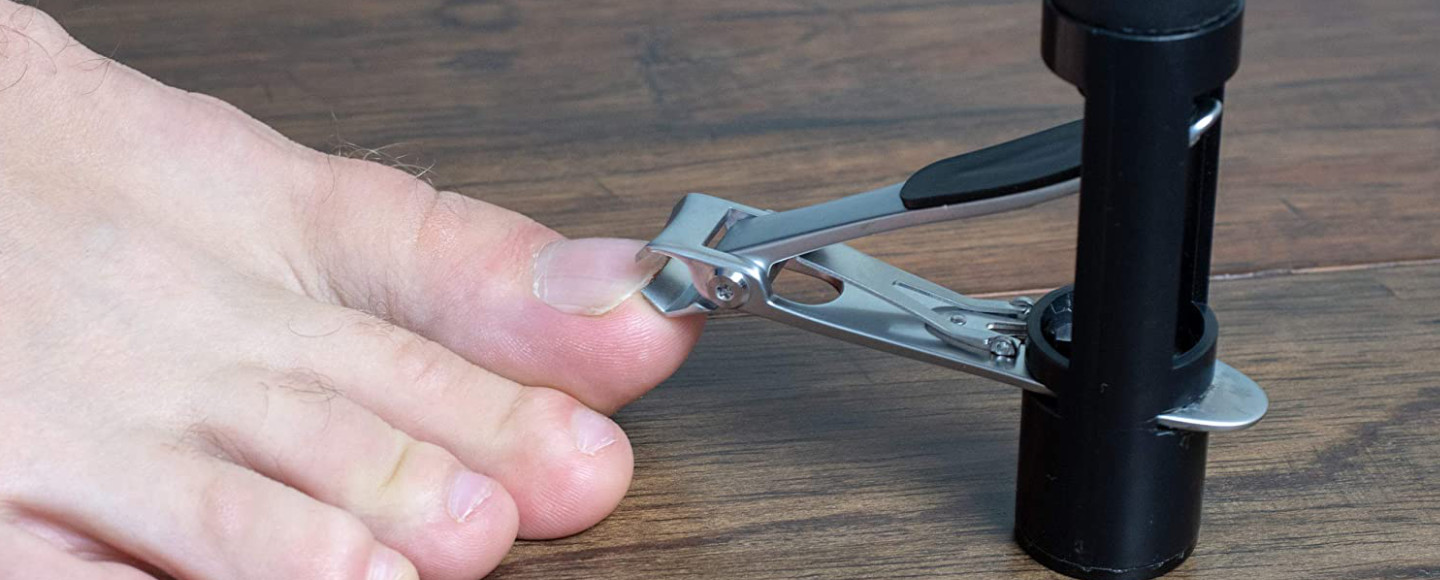
Best Long-Handle Toenail Clippers
For seniors who struggle to reach their feet due to back pain, limited hip flexibility, or obesity, long-handle toenail clippers are a practical solution that supports independence without requiring a caregiver. These tools extend your reach by several inches, eliminating the need to hunch forward or twist uncomfortably.
Some models include a built-in nail file and a small collection tray to catch clippings — a thoughtful feature for neater grooming sessions.
🛒 View Long-Handle Clippers on Amazon
Best Complete Home Foot Care Kit for Seniors
For caregivers setting up a proper foot care routine — or seniors who want everything in one place — a complete home podiatry kit brings together the essential tools without the guesswork. These kits are often more cost-effective than buying tools individually and make excellent gifts for older family members.
A well-equipped home foot care setup for seniors and caregivers might include:
- A foot soak basin
- Epsom salts or a prepared foot soak blend
- Urea cream for softening thick nails
- Wide-jaw or long-handle clippers
- An electric nail grinder for finishing and thinning
- A good moisturizing foot cream
Think of it as a small investment in comfort and independence — because that is exactly what it is.
🛒 Browse Complete Foot Care Kits
Step-by-Step Guide to Cutting Thick Elderly Toenails
Follow these steps in order for the safest, most comfortable results. Take your time — a slow, careful approach always produces better outcomes than hurrying through it.
Step 1 — Soften the Toenails First
Before picking up any tool, soak the feet in warm water (with or without Epsom salt) for 10–15 minutes. If you have been applying urea cream for a few days beforehand, the nails will already be noticeably softer. Pat the feet dry gently but begin trimming while the nails are still slightly pliable.
Never attempt to cut thick toenails when dry. This dramatically increases the risk of the nail splitting, cracking, or shattering — which leaves sharp edges and can cause injury to surrounding skin.
Step 2 — Clean and Disinfect Your Tools
Wipe your clippers, nippers, or grinder attachment with rubbing alcohol before use. This simple step reduces the risk of introducing bacteria or fungal spores to the nail bed — particularly important for seniors with diabetes, weakened immunity, or any open skin near the nails.
Step 3 — Set Up With Good Lighting and Proper Positioning
Good visibility matters more than most people realize. Poor lighting leads to poor cuts — and that is where most mistakes happen.
- Sit in a supportive chair with good back support
- Position near a bright window, or use a magnifying lamp if needed
- For caregivers: sit on a low stool facing the senior, with their foot resting on your knee or a padded footstool — this gives you close, stable access to each nail and reduces back strain for both of you
Caregiver's Grip Tip: Have the senior sit in a supportive chair with their foot resting comfortably on a folded towel on your knee. This position gives you close, stable access to each nail, better visibility, and reduces strain on your own back. Take short breaks if needed — there is no need to do all ten toenails in one sitting.
Step 4 — Cut in Small Sections, Slowly
This is the most important technique tip in this entire guide.
Never attempt to cut thick toenails in one large clip. Instead, make a series of small, careful cuts across the nail — working from one edge toward the other in small bites.
- Start at one corner of the nail
- Take 3–5 small cuts moving across the nail toward the opposite edge
- Use steady, controlled pressure — never force the clipper
- If you feel strong resistance, stop and re-soak the nail before continuing
This “nibbling” technique prevents the nail from splitting or cracking under the stress of a single large cut, and gives you much more control over the final shape.
Step 5 — Avoid Cutting Too Short
Leave a small amount of white nail visible beyond the nail bed. Cutting too short — especially at the corners — is one of the leading causes of ingrown toenails, and for seniors with diabetes or poor circulation, even a small skin break near the nail can become a serious problem if it is not noticed promptly.
Cut straight across the top of the nail rather than following a curved arc. This is the podiatrist-recommended technique for reducing ingrown nail risk.
Step 6 — File Sharp Edges Smooth
After clipping, use a nail file or emery board to gently smooth any sharp or rough edges. File in one direction rather than back and forth. This step is often skipped, but it makes a real difference — rough nail edges catch on socks, scratch surrounding skin, and cause discomfort while walking.
Step 7 — Moisturize the Feet
Finish by applying a good moisturizing foot cream to the entire foot, paying particular attention to the heels and the skin around the nails. Dry skin is more prone to cracking and can create entry points for infection — especially relevant for seniors with diabetic foot care needs.
Avoid applying cream directly between the toes, as trapped moisture there can encourage fungal growth over time.
🛒 Browse Moisturizing Foot Creams for Seniors
How to Cut Overgrown Toenails at Home
Trimming overgrown toenails requires a little more patience than regular maintenance — but it is manageable in most cases with the right approach and tools.
The key principle: gradual reduction over time, not one dramatic cut.
For Moderately Overgrown Nails
If the nail has grown long but has not significantly curved or thickened, follow the standard softening and step-by-step process above. Use nail nippers rather than standard clippers for better leverage on the excess length, and make multiple small cuts rather than attempting to remove everything in one clip.
You may need to make several passes across the nail, trimming a little further each time.
For Ram's Horn Nails — Severely Overgrown or Curved Toenails
Onychogryphosis — nails that have thickened dramatically and curved into a ram's horn shape — often requires a staged approach carried out across several sessions over weeks.
- Soak the nail thoroughly before each session
- Use a nail file or electric grinder to gradually thin the nail first — this reduces thickness before you attempt to cut through it
- Trim in small sections across multiple sessions rather than trying to reshape the nail in one sitting
- If the nail is extremely thick, curved, or causing pain, a single professional podiatry appointment can often resolve it safely and quickly
⚠️ Safety Note: Severely overgrown, infected, or painful toenails should be treated by a podiatrist rather than at home. Attempting aggressive trimming of ram's horn nails without proper tools or training can cause injury, bleeding, or infection — especially for seniors with diabetes or circulation problems.
Toenail Cutting Safety Tips for Seniors With Diabetes
⚠️ Important — Please Read Before Trimming
Seniors managing diabetes require extra care during toenail trimming. Even minor cuts or skin breaks on the feet can lead to serious complications including slow-healing wounds, infection, or ulceration. If you have diabetes and are unsure whether home trimming is appropriate for your situation, please consult your doctor or podiatrist first.
Diabetic foot care is one of the most important — and often underestimated — aspects of diabetes management. Toenail care is a central part of it. Here is what you need to know.
Why Diabetes Makes Foot Care More Complex
Peripheral neuropathy — nerve damage that reduces or eliminates sensation in the feet — is very common in long-term diabetes. This means small injuries, cuts, or pressure sores may not be felt at all, allowing problems to worsen before they are noticed.
Poor circulation compounds this by slowing healing significantly. A small nick near the nail bed that would heal quickly in a healthy adult can take weeks in someone with diabetes — and carries a substantially higher risk of infection.
Safe Practices for Trimming Diabetic Toenails
- Inspect feet carefully before and after trimming. Look for redness, swelling, blisters, or any breaks in the skin.
- Always use clean, disinfected tools. Never use tools that have not been sanitized.
- Cut straight across the nail and never dig into the corners.
- Never cut too short. Leave a sliver of white nail to reduce ingrown nail risk.
- Avoid sharp tools if there are tremors or shaking. An electric nail grinder is the safer choice in this case.
- Check for numbness or loss of sensation before trimming — if feeling in the feet is reduced, extra caution and close supervision are essential.
- Moisturize after trimming to protect skin integrity — but not between the toes.
- Perform daily foot checks. Look between the toes and at the soles for any changes, cuts, or sores.
When Not to Attempt Home Trimming for Diabetic Seniors
Seek professional podiatry care if:
- There is any current infection, swelling, or open sore on the foot
- The nails are severely thickened, curved, or ingrown
- There is significant neuropathy (reduced or absent sensation)
- Circulation is severely compromised
- Previous foot injuries have healed slowly or incompletely
For many seniors with diabetes, regular professional foot care appointments every 6–8 weeks are the safest and most practical solution. Many health insurance plans, including Medicare, cover podiatry visits for eligible diabetic patients — it is worth checking your coverage.
When to See a Podiatrist Instead of Cutting Toenails at Home
Home toenail care works well for many seniors — but there are situations where professional podiatry care is genuinely the safer and smarter choice. Recognizing when to step back is just as important as knowing how to do it yourself.
Consider seeing a podiatrist if:
- The nails are extremely thick, curved, or painful to touch or pressure
- There are visible signs of infection — redness, warmth, swelling, or any discharge
- The nail has separated from the nail bed
- There is bleeding around the nail that is not easily explained by a recent trim
- The senior cannot safely reach their feet and no caregiver is available to help
- Ingrown toenails are recurrent or causing persistent pain
- The senior has diabetes, peripheral neuropathy, or significant circulation problems
- There is numbness or loss of sensation in the feet
- The nails show advanced signs of fungal toenail infection that over-the-counter treatments have not resolved
A reassuring note: Professional foot care is often the safest option for seniors with advanced nail thickening or underlying medical conditions. A podiatrist can also provide personalized guidance on maintaining nail health between appointments — which makes the at-home routine easier and more effective going forward.
Common Mistakes to Avoid When Trimming Elderly Toenails
These are the errors that most often lead to discomfort, injury, or worsening nail problems — and all of them are easy to avoid once you know what to watch for.
- Cutting nails when they are dry. This is the most common mistake and the easiest to prevent. Always soften first.
- Cutting nails too short. Exposes the skin and significantly increases ingrown nail risk.
- Cutting in a curved arc. Always cut straight across — podiatrists consistently recommend this approach.
- Using dull or unsanitary tools. Dull blades require more force, cause more cracking, and unsanitary tools can transfer infection.
- Trying to cut in one large clip. Always make several small cuts across the nail instead.
- Poor lighting during trimming. Without good visibility it is easy to cut too close to the skin or miss uneven edges.
- Tearing or pulling nail pieces off. If a piece does not separate cleanly, cut it — never pull or tear it away.
- Digging into the nail corners. This is a primary cause of painful ingrown toenails.
- Rushing. Toenail care for seniors should always be calm and unhurried. If the senior is anxious or in discomfort, stop and resume another day.
- Skipping moisturizing afterward. Dry feet and nails are more prone to cracking, splitting, and skin breakdown.
Frequently Asked Questions
How do you cut very thick elderly toenails?
Soak the nails in warm water for 10–15 minutes to soften them first. Use wide-jaw toenail clippers or nail nippers rather than standard clippers. Make several small cuts across the nail rather than one large clip, working from one edge to the other. An electric toenail grinder is also a gentle and effective option for seniors with arthritis or limited hand strength.
What softens thick toenails before cutting?
A warm water soak for 10–15 minutes is the most accessible method. Epsom salt foot soaks, urea cream applied nightly for several days, and petroleum jelly applied overnight with a sock are all effective approaches. Urea cream in 20–40% concentration is particularly helpful for consistently thick or very stubborn nails.
Why are old people's toenails so thick?
Elderly toenails thicken due to a combination of age-related factors: slowed blood circulation, reduced nail growth rate (which causes keratin layers to accumulate), fungal toenail infections, repeated pressure from footwear over the years, and less frequent trimming due to reduced mobility or arthritis. Conditions like peripheral neuropathy and psoriasis can also contribute.
Is it safe to cut diabetic toenails at home?
It can be safe with proper precautions. Always use clean, disinfected tools; cut straight across and never too short; inspect the feet carefully before and after; and avoid digging into nail corners. Seniors with significant peripheral neuropathy, circulation problems, or any current foot infections should see a podiatrist rather than trimming at home.
What is the easiest way to trim thick toenails?
The easiest method combines soaking to soften the nails with using a purpose-built tool — either wide-jaw clippers, nail nippers, or an electric nail grinder. For seniors with arthritis or limited grip strength, an electric grinder is often the most comfortable option as it requires minimal squeezing force and provides good control over the result.
Can you file thick toenails instead of cutting them?
Yes — and it is often a gentler approach, especially for very thick or brittle nails. An electric nail grinder or a coarse emery board can be used to gradually reduce nail thickness and length over time. This is particularly well-suited for seniors with arthritis, tremors, or anyone who finds clipper pressure uncomfortable or difficult to control.
Should thick toenails be cut straight across?
Yes. Cutting straight across is the podiatrist-recommended technique for toenails. Cutting in a curved arc — particularly into the corners — significantly increases the risk of ingrown toenails, which can be painful and prone to infection, especially in older adults.
What causes ram's horn toenails in seniors?
Onychogryphosis — ram's horn toenails — develops when toenails grow in a thickened, curved shape over time. The most common causes are long periods without trimming (often due to limited mobility), repeated nail trauma, poor circulation, or fungal infection. They are most common in the big toenail and frequently require professional podiatry treatment to resolve safely.
Are electric toenail grinders safe for elderly adults?
Yes — electric toenail grinders are generally considered a very safe option for elderly adults, including those with arthritis, tremors, or weak grip strength. They work by gently sanding the nail surface rather than applying cutting pressure, which greatly reduces the risk of cracking or splitting. Use a low speed setting and avoid holding the grinder on one spot for too long to prevent any heat buildup on the nail.
Final Thoughts — Safe, Comfortable Foot Care Is Within Reach
Thick toenails are one of those challenges that often gets quietly endured rather than properly addressed — because it can feel awkward to ask for help, or because it has not been entirely clear how to manage it safely at home.
But with the right preparation and the right tools, trimming thick elderly toenails at home is very manageable. Millions of caregivers and older adults do it safely and comfortably every week.
Here is what to carry forward from this guide:
- Always soften the nails first — even a 10-minute warm soak makes a meaningful difference
- Use tools designed for thick nails — wide-jaw clippers, nail nippers, or an electric grinder
- Take your time — small cuts, good lighting, and a calm pace produce the best results
- Cut straight across and leave a little white nail visible to prevent ingrown nails
- Moisturize after every session to keep the skin and nails in good condition
- Know when to see a podiatrist — for diabetes, severe thickening, infection, or persistent pain, professional care is often the wisest and safest choice
If you are still looking for the right tools to get started, the options below are a practical place to begin. A small, one-time investment in purpose-built foot care tools often makes this entire routine genuinely easier — and helps support independence and comfort at home for years to come.
🛒 Recommended Tools to Get Started
Foot care does not have to be a source of stress or discomfort. With a little preparation and the right support, it can simply become part of a comfortable, manageable routine — helping seniors stay independent, comfortable, and well-cared for at home.
RECOMMENDED: Causes and Treatment of Thick Toes Among the Elderly