
Looking for the best walking stick for seniors? Discover the safest walking canes and walking poles for balance, arthritis, and fall prevention—plus expert tips on height, grip, and stability to help you choose confidently. Introduction: Regaining Confidence While Walking {#intro} There's a moment many seniors know too well—that split second of hesitation before stepping off …


Looking for the best walking stick for seniors? Discover the safest walking canes and walking poles for balance, arthritis, and fall prevention—plus expert tips on height, grip, and stability to help you choose confidently.
Introduction: Regaining Confidence While Walking {#intro}
There's a moment many seniors know too well—that split second of hesitation before stepping off a curb, crossing a slippery floor, or walking across uneven ground. That flicker of uncertainty is not weakness. It's your body telling you it wants a little more support. And there's nothing wrong with that.
Falls are one of the most serious concerns for adults over 65. According to the CDC, millions of older adults fall each year, and the fear of falling—even without an actual fall—can cause people to move less, stay home more, and slowly lose the independence they've worked their whole lives to maintain.
But here's the good news: a well-chosen Walking Stick or Cane can make an enormous difference. Not just physically—though the stability it provides is real—but emotionally, too. Many seniors report feeling more confident, more upright, and more willing to go out and enjoy life once they find the right support.
Whether you're managing arthritis, recovering from a hip or knee issue, dealing with balance concerns, or simply want to walk more safely on outdoor terrain, this guide was put together with you—or the person you care for—in mind.
We've carefully selected 11 of the safest and most comfortable walking sticks for seniors across a range of needs, budgets, and body types. Each product has been evaluated for stability, ease of use, grip comfort, and overall value. No fluff. No pressure. Just honest guidance to help you make a confident decision.
Quick Picks: Best Walking Sticks for Seniors {#quick-picks}
| Product | Best For | Weight Capacity | Foldable? | Stands On Its Own? | Handle Type | Price Range |
|---|---|---|---|---|---|---|
| HurryCane Freedom Edition | Best Overall | 350 lbs | Yes | ✅ Yes | Pivoting T-grip | $$ |
| Campbell Posture Cane | Upright Posture | 250 lbs | No | ✅ Yes | Forearm support | $$ |
| Drive Medical Quad Cane | Maximum Stability | 300 lbs | No | ✅ Yes | Offset | $ |
| York Nordic Walking Poles | Active/Fitness Seniors | 250 lbs | No | ❌ No | Ergonomic strap | $$ |
| Medline Gel Grip Offset Cane | Arthritis Relief | 250 lbs | No | ❌ No | Offset gel | $ |
| Brazos Wooden Walking Stick | Style & Premium Feel | 250 lbs | No | ❌ No | Carved wood | $$$ |
| Switch Sticks Folding Cane | Stylish Women's Option | 250 lbs | Yes | ❌ No | Derby | $$ |
| KingGear Self-Standing Cane | Best Budget | 300 lbs | Yes | ✅ Yes | T-grip | $ |
| Big Alex LED Folding Cane | Night Safety | 250 lbs | Yes | ❌ No | T-grip | $ |
| HoneyBull Pivot Base Cane | All-Terrain Support | 350 lbs | No | ✅ Yes | Offset | $$ |
| Nova Bariatric Heavy-Duty Cane | Heavy-Duty Support | 500 lbs | No | ❌ No | Offset | $$ |
👉 Check current prices and availability on Amazon →
Prices and availability are subject to change. Always verify before purchasing.
11 Best Walking Sticks for Seniors (Reviewed) {#best-walking-sticks}
1. HurryCane Freedom Edition — Best Overall Walking Cane for Seniors {#hurrycane}
⭐ Why Seniors Love It
The HurryCane has earned its reputation as the go-to Walking Cane for seniors who want stability without sacrificing comfort or convenience. Its patented pivoting base is what sets it apart—it flexes with your stride on any surface, indoors or out, giving you consistent support whether you're on tile, carpet, or uneven pavement.
Perhaps the most celebrated feature, though, is the one that's easy to overlook until you need it: this cane stands on its own. No more awkward leaning against walls. No more bending down to pick it up off the floor. That small detail changes everything for daily use.
⚙️ Key Features
- 360-degree pivoting base for multi-terrain support
- Self-standing design — stays upright when you set it down
- Foldable for easy travel and car storage
- Adjustable height to fit most users
- Supports up to 350 lbs
👍 Pros
- Exceptional stability on uneven surfaces
- Truly free-standing design eliminates the need to bend
- Lightweight and easy to fold
- Fits into a bag or suitcase easily
👎 Cons
- The pivoting mechanism may feel unfamiliar at first
- Some users prefer a firmer, stationary base
👵 Best For Seniors who walk on varied surfaces—both indoors and outdoors—and want a reliable, all-around cane that's easy to travel with.
🧠 Real-Life Use Case Margaret, 74, used to dread grocery trips because her previous cane would tip over whenever she set it down to reach a shelf. With the HurryCane, she sets it down, it stays put, and she can shop without the stress of retrieving it from the floor.
2. Campbell Posture Cane — Best Walking Cane for Upright Posture & Balance {#campbell}
⭐ Why Seniors Love It
If you find yourself hunching forward when you walk, or if lower back pain accompanies your outings, the Campbell Posture Cane was designed with you in mind. Unlike standard canes that encourage you to lean forward, the Campbell's unique forearm support encourages a more upright, natural walking posture—which takes pressure off the back and distributes weight more evenly.
⚙️ Key Features
- Forearm support platform for upright posture alignment
- Quad base for four-point stability
- Self-standing design
- Height-adjustable with push-button mechanism
- Available in multiple colors
👍 Pros
- Noticeably reduces lower back strain
- Great for seniors who walk long distances
- Self-standing for easy placement
👎 Cons
- Slightly bulkier than standard canes
- Not foldable, which limits portability
👵 Best For Seniors with chronic back pain, postural concerns, or those recovering from spinal surgery who need both support and posture correction.
🧠 Real-Life Use Case Robert, 79, was told by his physical therapist to “stand up straighter” while using a cane. The Campbell made that advice much easier to follow—without having to think about it constantly.
3. Drive Medical Quad Cane — Best for Maximum Stability {#drive-quad}
⭐ Why Seniors Love It
When basic support isn't enough, the Drive Medical Quad Cane steps in. With four contact points on the ground instead of one, it offers far greater stability than a standard Walking Stick—making it an excellent choice for seniors with more significant balance challenges or those recovering from a stroke or surgery.
⚙️ Key Features
- Wide quad base with four rubber-tipped feet
- Offset handle for optimal weight distribution
- Self-standing design
- Available in small and large base versions
- FDA-registered medical device
👍 Pros
- Outstanding stability—ideal for those with weak legs or poor balance
- Offset handle reduces wrist and hand strain
- Affordable and widely available
👎 Cons
- Heavier and wider than single-tip canes
- Less practical on stairs or narrow spaces
👵 Best For Seniors with significant balance issues, post-stroke recovery, or those who feel unsafe with a standard single-tip cane.
🧠 Real-Life Use Case After her hip replacement, Dorothy's therapist recommended a quad cane for the first few months of recovery. The wide base gave her the confidence to take her first unassisted steps around the house.
4. York Nordic Walking Poles — Best for Active Seniors & Fitness Walking {#york-nordic}
⭐ Why Seniors Love It
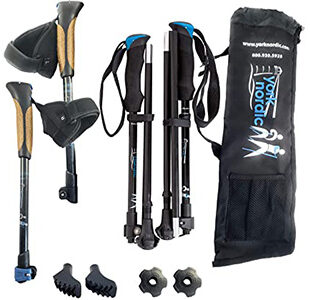
Walking Poles for Seniors are gaining popularity for good reason—and the York Nordic poles represent one of the best options for active older adults. Unlike a single cane, poles provide two points of contact and engage your arms and upper body with every stride. The result is improved posture, better calorie burn, and a noticeably smoother walking gait.
⚙️ Key Features
- Ergonomic strap handles reduce grip fatigue
- Adjustable length for varied terrain and user height
- Carbide steel tip for outdoor use; rubber tip for pavement
- Lightweight aluminum construction
- Sold as a pair
👍 Pros
- Improves balance across all types of terrain
- Upper-body engagement reduces joint impact
- Great for seniors who walk for fitness or recreation
👎 Cons
- Requires coordination to use both poles simultaneously
- Not suitable for those with significant weakness in both arms
👵 Best For Seniors who are relatively active and want to walk longer distances outdoors with less fatigue and better stability.
🧠 Real-Life Use Case Jim, 68, started using Nordic Walking Poles after his knee replacement and found that the two-pole technique took enough pressure off his knee that he could comfortably walk his local park trail again.
5. Medline Gel Grip Offset Cane — Best Walking Stick for Seniors with Arthritis {#medline}
⭐ Why Seniors Love It
For anyone whose hands ache at the thought of gripping a hard plastic handle, the Medline Gel Grip Offset Cane is a welcome relief. The soft gel handle absorbs pressure from the palm and fingers—a significant benefit for those managing arthritis, reduced grip strength, or sensitive joints.
⚙️ Key Features
- Soft gel grip handle reduces hand pressure
- Offset design aligns weight over the center of the cane for better balance
- Push-button height adjustment
- Non-slip rubber tip
- Lightweight aluminum shaft
👍 Pros
- Genuinely more comfortable for arthritic hands
- Offset design reduces wrist strain
- Very lightweight and easy to maneuver
👎 Cons
- Does not self-stand
- Gel handle may wear down with extended heavy use
👵 Best For Seniors with arthritis, reduced grip strength, or hand pain who need a comfortable everyday cane that won't aggravate sore joints.
🧠 Real-Life Use Case Helen, 72, tried several canes before finding the Medline Gel Grip. “The other ones hurt my hands after a few minutes,” she says. “This one I can use all day.”
6. Brazos Wooden Walking Stick — Best Premium & Stylish Walking Stick {#brazos}
⭐ Why Seniors Love It
Not every senior wants a cane that screams “medical device.” The Brazos Wooden Walking Stick is handcrafted from natural wood—available in hickory, cherry, and other varieties—and looks far more like a classic gentleman's or lady's walking stick than a clinical aid.
⚙️ Key Features
- Handcrafted natural wood construction
- Multiple wood types and styles available
- Comfortable carved handle
- Durable rubber tip
- Available in various heights
👍 Pros
- Aesthetically beautiful and dignified
- Surprisingly durable and sturdy
- A thoughtful and meaningful gift for an older adult
👎 Cons
- Not height-adjustable
- Does not fold or self-stand
👵 Best For Seniors who want light everyday support and prefer a walking stick that reflects their personal style and dignity.
🧠 Real-Life Use Case Frank, 81, refused to use a “hospital cane.” His daughter found him a Brazos hickory stick, and he hasn't gone for an evening walk without it since.
7. Switch Sticks Folding Cane — Best Stylish Folding Cane for Women {#switch-sticks}
⭐ Why Seniors Love It
Switch Sticks have earned a devoted following among women who want a Walking Cane that fits their personality. Available in dozens of patterns and prints—from florals to geometric designs—these folding canes fold neatly into a small pouch, making them genuinely portable and easy to keep in a handbag.
⚙️ Key Features
- Folds into four sections for compact storage
- 30+ patterns and color options
- Comfortable derby handle
- Height-adjustable
- Includes carrying bag
👍 Pros
- Stylish and personal—doesn't feel clinical
- Folds easily for travel and outings
- Lightweight design
👎 Cons
- Does not self-stand
- Not suitable as primary support for significant balance issues
👵 Best For Women who want an attractive, portable cane for occasional use—shopping, events, or travel—without compromising on style.
🧠 Real-Life Use Case Carol uses her Switch Sticks cane at her monthly book club meetings and says her friends always compliment the pattern. “It doesn't feel like a cane—it feels like an accessory.”
8. KingGear Self-Standing Cane — Best Budget Walking Cane for Seniors {#kinggear}
⭐ Why Seniors Love It
Great support doesn't have to come with a steep price tag. The KingGear Self-Standing Cane packs the most-wanted features—a self-standing base, foldable design, and adjustable height—into an affordable package that doesn't sacrifice functionality.
⚙️ Key Features
- Self-standing tri-pod base
- Foldable for travel and storage
- Adjustable height with push-button lock
- Comfortable T-grip handle
- Supports up to 300 lbs
👍 Pros
- Excellent value for money
- Self-standing feature is a standout at this price
- Easy to fold and carry
👎 Cons
- Build quality is not as premium as higher-end models
- Pivot base is not as sophisticated as the HurryCane
👵 Best For Budget-conscious seniors or caregivers who want reliable daily functionality without a large investment.
🧠 Real-Life Use Case David's son wanted to get him a cane quickly after a minor fall, but wasn't sure which one to commit to. The KingGear gave them all the essential features at a price that made the decision easy.
9. Big Alex LED Folding Cane — Best Walking Cane for Night Safety {#bigalex}
⭐ Why Seniors Love It
For seniors who are up at night or who walk outdoors in low-light conditions, the Big Alex LED Folding Cane offers a feature most canes simply don't have: a built-in LED light at the base. This simple addition makes nighttime trips to the bathroom or early morning walks significantly safer.
⚙️ Key Features
- Built-in LED light at the tip for nighttime visibility
- Folds for easy storage
- Adjustable height
- Comfortable T-handle
- Wrist strap included
👍 Pros
- LED light is genuinely useful for low-light navigation
- Foldable and easy to store beside the bed
- Lightweight construction
👎 Cons
- LED battery requires occasional replacement
- Does not self-stand
👵 Best For Seniors who frequently navigate dark hallways, get up at night, or walk in early morning or evening conditions.
🧠 Real-Life Use Case Louise, 77, had a frightening stumble in her hallway at 3 AM. Her daughter got her the Big Alex, and now the lit path ahead of her gives her the confidence to get to the bathroom safely every night.
10. HoneyBull Pivot Base Cane — Best for All-Terrain Support {#honeybull}
⭐ Why Seniors Love It
Inspired by a similar mechanism to the HurryCane, the HoneyBull Pivot Base Cane offers a pivoting base that flexes with uneven terrain—making it a smart choice for seniors who spend time outdoors on grass, gravel, or sloped surfaces.
⚙️ Key Features
- Pivot base adapts to uneven terrain
- Self-standing design
- Comfortable offset handle
- Supports up to 350 lbs
- Adjustable height
👍 Pros
- Self-standing for easy placement
- Handles terrain variation confidently
- Offset handle design supports better weight distribution
👎 Cons
- Not foldable
- Slightly heavier than single-tip canes
👵 Best For Seniors who spend time outdoors on varied surfaces and need reliable grip on uneven ground.
🧠 Real-Life Use Case George loves his garden, but uneven soil made walking with his old cane unpredictable. The HoneyBull's pivoting base adapts with him as he moves between the lawn and the path.
11. Nova Bariatric Heavy-Duty Cane — Best Walking Cane for 300–500 lb Support {#nova}
⭐ Why Seniors Love It
Standard canes are built for standard body types. For seniors who need a heavier-duty option, the Nova Bariatric Cane provides a reinforced frame and a wider base that supports up to 500 lbs—without making the user feel like they're using a specialty device.
⚙️ Key Features
- Reinforced steel construction
- Supports up to 500 lbs
- Wide offset handle for secure grip
- Large quad base for stability
- Adjustable height with push-button lock
👍 Pros
- Built for durability and heavier use
- Widely available and affordable
- Stable quad base for confident support
👎 Cons
- Heavier than standard canes
- Does not fold
👵 Best For Seniors who need a cane rated for higher weight capacities without sacrificing safety or functionality.
🧠 Real-Life Use Case William, 76, had tried three canes that eventually bent or wobbled under his weight. The Nova Bariatric has held firm for over a year of daily use.
⭐ Editor's Choice: Top 3 Recommendations at a Glance {#editors-choice}
Choosing just one from a list of 11 can feel overwhelming—so here's a simple breakdown:
| Need | Best Choice |
|---|---|
| 🏆 Best Overall | HurryCane Freedom Edition |
| 🤲 Best for Arthritis | Medline Gel Grip Offset Cane |
| ⚖️ Best for Stability | Drive Medical Quad Cane |
👉 See all 11 options on Amazon →
If you're still not sure, the HurryCane is the one we recommend most often. It handles multiple needs, self-stands, folds for travel, and is trusted by thousands of seniors across the country.
Walking Stick vs Cane vs Walking Poles: What's the Difference? {#comparison}
These three terms are often used interchangeably, but they serve slightly different purposes—and knowing the difference can help you make the right choice.
🦯 Walking Stick
A Walking Stick is typically a single-tipped shaft, often made of wood or aluminum, used for light balance support and casual walking. It's the most traditional form of mobility aid and works well for seniors who want minimal support with a natural, elegant look.
🦽 Cane
A Cane is the medical-grade equivalent of a walking stick. It's designed for weight redistribution—taking pressure off a weak leg, recovering joint, or painful hip. Most canes feature ergonomic handles (offset, gel, or Fritz-style), adjustable shafts, and non-slip rubber tips. For seniors who need genuine balance support, a Cane is usually the better choice.
🏃 Walking Poles
Walking Poles for Seniors—sometimes called Nordic Walking Poles or Trekking Poles—come in pairs and provide two-point support. They engage your arms, core, and upper body with every step, which reduces impact on the hips and knees while improving overall posture and endurance. The best Walking Poles for Seniors with balance issues offer a meaningful advantage over single-point support: your body is never without two contact points on the ground.
Which should you choose?
- Light support and style → Walking Stick
- Daily balance, joint pain, or post-surgery recovery → Cane
- Active outdoor walking, fitness, or dual-point stability → Walking Poles
Why Handle Type Matters for Seniors {#handle-types}
The handle you grip every day has a bigger impact on your comfort and safety than most people realize. Here's a clear breakdown of the three most common handle types:
🔹 T-Handle
The classic T-shaped handle is the most recognizable cane grip. It's straightforward and familiar, but distributes pressure across a relatively small surface area of the palm. Fine for light use, but not ideal for those with arthritis or long-duration walking.
🔹 Offset Handle (Recommended for Balance)
The Offset Handle is often considered the gold standard for everyday cane use. Because the shaft sits slightly forward of the grip, your body weight is distributed directly over the center of the cane—not to the side. This improves balance, reduces tipping risk, and takes pressure off the wrist. Most physical therapists recommend an offset handle for seniors who need reliable daily support.
🔹 Fritz Handle
The Fritz Handle is shaped to cradle the fingers and palm, distributing pressure across a wider surface area. It's especially well-suited for seniors with arthritis, small hands, or reduced grip strength. If holding a cane causes hand pain, a Fritz Handle is often the solution.
Best Walking Sticks for Seniors with Arthritis {#arthritis}
Arthritis is one of the most common reasons seniors start using a Walking Cane—and it's also one of the reasons the wrong cane can make things worse. A hard, narrow handle that must be gripped tightly puts direct pressure on already-inflamed joints.
Here's what to look for if arthritis is a factor:
- Gel grips: Soft, shock-absorbing material that reduces impact transferred to the hand and wrist
- Foam handles: Slightly compressible and gentler on sensitive fingers
- Shock-absorbing shafts: Some canes have internal spring mechanisms that reduce vibration on hard surfaces
- Wider grip diameter: Easier to hold without a tight, painful grip
- Reduced wrist pressure: Offset and Fritz handles both accomplish this more effectively than a standard T-grip
Our top picks for seniors with arthritis are the Medline Gel Grip Offset Cane (best for daily use) and the Campbell Posture Cane (best if back pain accompanies your arthritis).
Best Walking Poles for Seniors with Balance Issues {#balance}
If falls—or the fear of falling—are a real concern, Walking Poles for Seniors with balance issues deserve serious consideration.
Here's why dual poles work so well:
- Two points of contact at all times: Unlike a single cane, poles ensure you always have at least two supports grounded—one pole and one foot—which dramatically reduces the chance of an unstable moment
- Posture alignment: Using poles encourages an upright walking posture, which itself improves balance
- Reduced fall risk on uneven terrain: Outdoor surfaces like grass, gravel, and cobblestones become far more manageable
- Upper body engagement: Strengthening the arms, shoulders, and core through walking builds long-term stability
For seniors with mild-to-moderate balance concerns who are otherwise mobile and active, Nordic Walking Poles are one of the most effective tools available—not just for safety, but for overall health.
How to Choose the Best Walking Stick for Seniors {#buying-guide}
With so many options available, here's a practical checklist to guide your decision:
📏 Get the Height Right
The most important factor in cane safety is proper height. Stand upright with your shoes on. The top of the cane handle should align with your wrist crease (the joint where your hand meets your forearm). At this height, your elbow should bend at a comfortable 15–20 degrees when you hold the cane.
Too short: forces you to hunch forward. Too tall: puts uncomfortable pressure on the shoulder.
Most adjustable canes cover a height range of approximately 28–38 inches.
⚖️ Check the Weight Capacity
Never use a cane rated below your body weight. Most standard canes support 250–300 lbs. If you need more, look for bariatric options like the Nova Bariatric Heavy-Duty Cane, rated to 500 lbs.
🦶 Prioritize the Self-Standing Feature
This feature is one of the most practical quality-of-life upgrades available in a walking cane. A cane that stands on its own means you never have to:
- Hunt for a wall to lean it against
- Ask someone else to pick it up
- Risk straining your back by bending down for it
For many seniors, this feature alone is the deciding factor.
🧳 Consider Foldability for Travel
If you travel—even just day trips in the car—a foldable cane is far more convenient than a rigid one. Folding canes typically collapse to 12–14 inches and fit in a bag, purse, or glove compartment.
🛞 Don't Neglect the Tip
The rubber tip at the bottom of your cane is your only contact with the ground. It should be inspected regularly and replaced every 3–4 months with regular use—or sooner if it shows visible wear. A worn tip dramatically reduces grip and increases fall risk.
How to Use a Walking Stick Safely {#how-to-use}
Using a cane correctly makes a real difference in how much support it provides. Here's what to know:
Which side should the cane be on?
Hold the cane on your stronger side—opposite to the painful or weaker leg. This may feel counterintuitive, but it's the medically correct way. The cane and the weaker leg move forward together, with the stronger leg following.
The correct walking pattern:
- Move the cane and your weaker leg forward at the same time
- Bear weight through the cane as your weaker leg takes a step
- Bring your stronger leg forward
- Repeat
On stairs:
- Going up: lead with your stronger leg, then bring up the weaker leg and cane together
- Going down: lead with the cane and weaker leg, then bring the stronger leg down
A helpful memory aid: Up with the good, down with the bad.
Indoors vs outdoors:
Indoors, watch for rugs, wet floors, and thresholds. Outdoors, be mindful of uneven surfaces, wet leaves, and slopes. If you walk regularly on varied terrain, consider a cane with a pivoting base or switch to poles for better multi-surface stability.
Buying for a Parent? Here's What to Consider
Choosing a cane as a gift for a parent or older relative is a kind and practical gesture—but it's worth thinking through a few practical details:
- Choose foldable models for easy storage in the car and portability during outings
- Look for lightweight designs (under 1 lb is ideal) so the cane doesn't add to fatigue
- Prioritize easy-grip handles like gel or foam if your parent has arthritis or reduced hand strength
- Consider color or style if appearance matters to them—some seniors are more likely to actually use a cane they feel good about
- Self-standing is a strong bonus at any age or ability level—it makes the cane infinitely easier to manage day-to-day
When in doubt, the HurryCane Freedom Edition is a universally well-received option that covers most bases elegantly.
Benefits of Walking Sticks for Seniors {#benefits}
It's easy to focus on the practical mechanics of canes and poles, but it's worth stepping back to appreciate what this kind of support actually gives people:
Fall Prevention The most documented benefit. Even modest balance support from a cane or pole significantly reduces the risk of falls—and the serious injuries that often follow.
Better Posture Properly fitted canes encourage upright walking, which reduces strain on the spine, hips, and knees over time.
Reduced Joint Pressure Studies show that using a cane on the opposite side of an affected hip or knee can reduce joint load by up to 50 percent. That's meaningful pain relief for anyone managing osteoarthritis.
Greater Independence When walking feels safer, seniors go further. They shop, visit friends, walk in the park, and stay connected to the world around them. The ripple effects on mental health and quality of life are significant.
Confidence Perhaps the most underrated benefit of all. Walking with steadiness—knowing that support is there if you need it—changes how people carry themselves and engage with the world. That confidence is worth a great deal.
Frequently Asked Questions {#faq}
Is a walking stick or cane better for balance?
A Cane—particularly one with an offset handle or a quad base—generally provides better balance support than a traditional Walking Stick. Walking Sticks are better suited to light support and casual use. If balance is a genuine concern, choose a cane with a quad base or a pivoting base design.
Are walking poles safer than a cane?
For active seniors with mild balance issues, Walking Poles for Seniors can be safer than a single cane because they provide two contact points simultaneously. However, they require more coordination and upper body strength. For those with significant mobility limitations, a quad cane or pivot-base cane may be more appropriate.
What is the best cane for arthritis?
The Medline Gel Grip Offset Cane is our top recommendation for seniors with arthritis. Its soft gel handle reduces pressure on inflamed joints, and the offset design minimizes wrist strain. A Fritz-style handle is also an excellent option for those with small hands or finger joint pain.
Does Medicare cover walking sticks?
Medicare Part B may cover a portion of the cost of a cane if it is deemed medically necessary by a physician and prescribed as durable medical equipment (DME). Standard decorative walking sticks are generally not covered. Check with your healthcare provider and Medicare directly for current coverage criteria, as these can change.
What is the best cane for small hands?
Seniors with smaller hands typically do best with a Fritz-style handle, which distributes grip pressure across the fingers rather than concentrating it in the palm. The Medline Gel Grip Cane is also well-suited to smaller hands due to its softer, more conformable grip surface.
How tall should a walking cane be?
Stand upright in your everyday shoes. The top of the cane handle should be level with your wrist crease. At this height, your elbow will have a slight bend (15–20 degrees) when holding the cane—the ideal position for effective support without shoulder strain.
Do walking poles prevent falls?
Yes—research supports the use of Walking Poles as a fall-prevention tool, particularly on outdoor and uneven terrain. The dual contact points, improved posture, and upper-body engagement all contribute to better stability. For seniors who are active outdoors, poles are one of the most effective tools for reducing fall risk.
A Final Word
Choosing a walking stick, cane, or set of poles is a practical decision—but it's also a personal one. It's about staying active, staying safe, and staying connected to the life you want to live.
The right support won't slow you down. It will help you keep going.
Whether you're picking something out for yourself or for someone you love, we hope this guide has made that decision a little clearer—and a little easier.
👉 Browse all 11 recommended walking sticks on Amazon →
We may earn a small commission if you purchase through our links, at no extra cost to you. This helps us keep SeniorCouch.com running so we can continue writing honest, helpful content for seniors and their families.
Related Reading
- Best Shoes for Seniors with Balance Issues
- Fall Prevention Tips for the Home
- Best Exercises for Senior Balance
- Best Slippers for Elderly Stability
- Best Recliners for Seniors
SeniorCouch.com is a trusted resource for seniors and caregivers. Our recommendations are based on research, user feedback, and expert consultation. We are not a medical authority—always consult your doctor or physical therapist before making changes to your mobility routine.
RECOMMENDED GUIDES




Comments
Jacqui Ferguson
I find this helpful, except that I do not buy from Amazon. I see them as threatening small businesses and local shopkeepers. Please can you advise on other light but stable adjustable walking sticks that can fit into a back pack ?