There's something quietly overwhelming about noticing your parent's toenails for the first time in a while — thick, yellowed, curling inward, and clearly uncomfortable. Or perhaps you're a senior yourself, finding it harder to bend down, grip the clippers, or even see clearly enough to do the job safely. You're not alone. Nail care for …


There's something quietly overwhelming about noticing your parent's toenails for the first time in a while — thick, yellowed, curling inward, and clearly uncomfortable. Or perhaps you're a senior yourself, finding it harder to bend down, grip the clippers, or even see clearly enough to do the job safely.
We'll walk through it all simply and honestly. No pressure. Just clear, practical guidance — the kind you'd get from a trusted friend who happens to know a lot about senior foot health.
Why Elderly Toenail Care Is So Important
Toenails change significantly as we age. They grow more slowly, become thicker, and can lose their natural moisture — making them harder, more brittle, and more prone to cracking or lifting. These changes aren't just cosmetic. They create real, everyday discomfort.
When toenails grow too long or too thick, they press against the inside of shoes. That pressure alone can make walking painful. Over time, it changes how a person walks — and subtly disrupts balance. For older adults, poor balance is one of the leading causes of falls. In that way, something as simple as an untrimmed toenail can have serious consequences.
For seniors living with diabetes or poor circulation, the stakes are even higher. Minor wounds, ingrown nails, or small infections that a younger person might brush off can develop into serious complications very quickly when blood flow to the feet is reduced.
Good geriatric toenail care — done regularly, done safely — can prevent pain, reduce infection risk, support comfortable walking, and protect independence. That matters.
Common Toenail Issues in the Elderly
Understanding what you're looking at helps you respond to it properly. Here are the most common toenail issues in the elderly:
- Thick toenails (onychauxis): Often caused by aging, fungal infection, or repeated pressure. Thick nails are harder to cut and can press painfully against footwear.
- Ingrown toenails: When the nail edge curves and grows into the surrounding skin, causing redness, swelling, and sometimes infection.
- Yellow toenails: A common sign of fungal infection, though they can also result from nail polish use or aging alone.
- Fungal nail infections (onychomycosis): Very common in older adults. Nails become discolored, thick, brittle, and sometimes foul-smelling.
- Curved or ram's horn nails (onychogryphosis): Nails that grow in a curved, horn-like shape — often seen in elderly individuals who've had limited foot care for a long period.
- Brittle or cracked nails: Caused by dryness, nutritional deficiencies, or repeated water exposure. Cracked edges can snag on socks and cause small skin tears.
- Nail separation (onycholysis): When the nail plate begins to lift away from the nail bed, often due to fungus, injury, or certain medications.
Many of these conditions are very manageable with the right care. A few require professional treatment — and knowing the difference is part of keeping feet healthy.
Signs a Senior Needs Professional Nail Care
Home nail care works well for many seniors. But there are clear signs that a professional — whether a podiatrist, medical pedicurist, or mobile foot care nurse — should step in instead.
Consider seeking professional nail care for elderly adults when:
- The senior cannot safely bend down to reach their feet
- Vision problems make it difficult to see what they're trimming
- Diabetes or neuropathy is present (reduced sensation in the feet increases injury risk)
- Toenails are extremely thick, hard, or curved
- There are signs of infection — redness, warmth, pus, or odor
- Ingrown nails have become painful or recurrent
- The senior has a history of foot ulcers or poor wound healing
Professional nail services aren't a luxury in these situations — they're genuinely the safer choice. We'll cover those options in detail later in this guide.
How to Care for Aging Toenails Safely at Home
Nail care for elderly adults at home can be done safely and confidently — with the right approach, the right tools, and a little patience. The key is consistency and attention to detail rather than rushing through a task that deserves care.
Step-by-Step Elderly Toenail Care Routine
Follow these steps for a thorough, safe at-home toenail care routine:
- Soak the feet in warm water for 10–15 minutes. This softens the nails and surrounding skin, making trimming significantly easier and safer. Add a small amount of gentle soap or Epsom salt if desired. Avoid very hot water, especially for seniors with diabetes or reduced sensation.
- Dry the feet thoroughly. Pay careful attention to the spaces between toes — moisture trapped there can encourage fungal growth. Use a soft towel and pat gently rather than rubbing.
- Use proper nail clippers for the job. Standard nail clippers are often too small and require too much grip force for elderly nails. A wide-jaw toenail clipper or an electric nail trimmer works much better. More on specific tool recommendations shortly.
- Trim nails straight across. Avoid rounding the corners. Cutting in a straight line across helps prevent ingrown nails. Leave a small amount of white nail visible at the tip — don't cut too close to the skin.
- File rough or sharp edges. A nail file or emery board smooths any jagged edges left after clipping. This prevents nails from catching on socks or scratching nearby skin.
- Moisturize the feet and cuticles. Aging skin loses moisture quickly. Apply a foot cream or lotion to the tops and bottoms of the feet, and gently around the cuticle area. Avoid applying lotion between the toes.
- Inspect the feet carefully. Check for any redness, swelling, blisters, cuts, or changes in skin color — especially on the soles and between the toes. Early detection of skin problems is particularly important for seniors with diabetes.
How to Cut the Elderly Toenails Safely
Knowing how to cut the elderly toenails properly makes a real difference in both comfort and safety. Here are some focused tips for the trimming step itself:
Best time to trim: Right after the foot soak, when nails are at their softest. Never try to cut dry, hard toenails — especially thick ones. The nail can crack, splinter, or cause the clipper to slip.
Use slow, controlled cuts: With thick or hard nails, it can help to make several small cuts across the nail rather than one full cut. This reduces the pressure needed per cut and gives you better control.
Avoid cutting too short: The nail should just clear the end of the toe. Cutting too close to the skin increases the risk of ingrown nails and accidental cuts.
For very thick nails: A standard clipper may simply not be strong enough, and forcing it risks injury. A heavy-duty clipper designed for thick nails, or a podiatrist's nail drill, is a much safer option. Alternatively, an electric nail file can gradually reduce the thickness of nails that are too hard to cut directly.
When NOT to cut nails at home: If the nail is deeply ingrown, showing signs of infection, or attached in an unusual way — leave it alone and seek professional help. Attempting to cut an infected ingrown nail at home can make the situation significantly worse.
How to Cut Elderly Fingernails
Fingernail care for elderly adults follows similar principles but requires a slightly different approach. Fingernails are thinner and more flexible than toenails, so standard fingernail clippers are usually appropriate — though ergonomic or wide-handle designs help seniors with reduced grip strength.
A few important differences:
- Shape matters: Fingernails can be trimmed with a very slight curve to follow the natural shape of the fingertip. Toenails should always be cut straight across.
- Prevent splitting: Filing in one direction (rather than back and forth) reduces the risk of nails splitting or tearing. This is especially important for brittle nails.
- Nail softening helps here too: Soaking fingertips in warm water for 5 minutes before trimming makes the process gentler for seniors with hard or ridged nails.
- For seniors with arthritis: Lever-style or spring-loaded nail clippers require far less grip strength. Electric nail trimmers are also a very practical option — simply holding them against the nail does the work.
If a caregiver is cutting a senior's fingernails, working slowly and communicating at each step helps the senior feel in control and reduces anxiety — especially if they have dementia or heightened sensitivity.
Caregiver Tips for Safe Nail Trimming
If you're a family member or professional caregiver helping with toenail care for elderly adults, these practical tips can make the experience safer and more comfortable for everyone:
- Good lighting is essential. Work near a window or under a bright lamp. A magnifying glass with a built-in light can be especially helpful for caregiver nail trimming.
- Position carefully. The senior should be seated comfortably with their foot resting on a small stool or on the caregiver's knee. Avoid asking them to stretch or strain.
- Work slowly and explain as you go. For seniors with dementia, narrating each small step in a calm voice — “I'm just going to gently hold your foot now” — helps prevent startled reactions.
- Stabilize shaky hands. If the senior's hands or feet tend to move, gently but firmly hold the toe being worked on. A non-slip mat under the foot can also help.
- Never rush. Nail care should take as long as it needs to. Hurrying is when small accidents happen.
Mistakes to Avoid During Elderly Nail Care
These common mistakes are easy to make — and easy to avoid once you know to watch for them:
- Cutting corners too deeply: Rounding the corners of toenails significantly increases the risk of ingrown nails.
- Sharing nail care tools: Fungal infections can spread through shared clippers. Each person should have their own set, and tools should be cleaned with rubbing alcohol between uses.
- Ignoring early signs of fungal infection: Yellow, thickened, or crumbling nails won't resolve on their own. Early treatment is far easier than treating an established infection.
- Using dull clippers: Dull blades crush rather than cut nails cleanly. This leads to jagged edges, splitting, and unnecessary pressure on the nail bed.
- Pulling or tearing hangnails: This creates small open wounds that can become infected. Gently clip hangnails with small nail scissors instead.
Best Nail Care Tools & Products for Elderly Adults
Standard nail care tools — the ones you'd pick up at any supermarket — are often designed for younger, more dexterous hands. For elderly adults, the right tools make an enormous difference. They reduce the grip strength required, improve control, and make the whole process gentler and safer.
Here's what to look for — and our top picks in each category.
Top Picks for Elderly Toenail Care Products
Best Toenail Clippers for Thick Nails
Thick toenails require clippers with a wide jaw opening and strong, sharp blades. Look for stainless steel construction with a long handle that provides leverage without requiring a tight grip.
Why it works for seniors: Heavy-duty clippers cut through even significantly thickened nails in one controlled motion — no squeezing, straining, or multiple awkward attempts.
Best for: Seniors with thickened toenails from aging or fungal infection.
Key features to look for: Wide jaw (at least 15mm opening), long handle, sharp stainless steel blade, non-slip grip.
Arthritis-friendly: Yes — look for designs with cushioned, wide handles.
Safety note: Even with heavy-duty clippers, soak nails first for the safest result.
Best Electric Nail Trimmer for Seniors
Electric nail trimmers are among the most helpful tools available for elderly nail care. They work by gently filing the nail down rather than cutting — which means no gripping, no squeezing, and virtually no risk of cutting too deep.
Why it works for seniors: The rotating head does all the work. Seniors simply rest the device against the nail and move slowly across. Many models also come with multiple speed settings and replacement filing heads.
Best for: Seniors with arthritis, limited grip strength, or very hard nails that are difficult to cut with manual clippers.
Key features to look for: Multiple filing heads for different nail thickness, battery or rechargeable operation, quiet motor, LED light attachment.
Pros: Extremely safe, no cutting risk, gentle on nails.
Cons: Takes longer than manual clipping; not ideal for very overgrown nails.
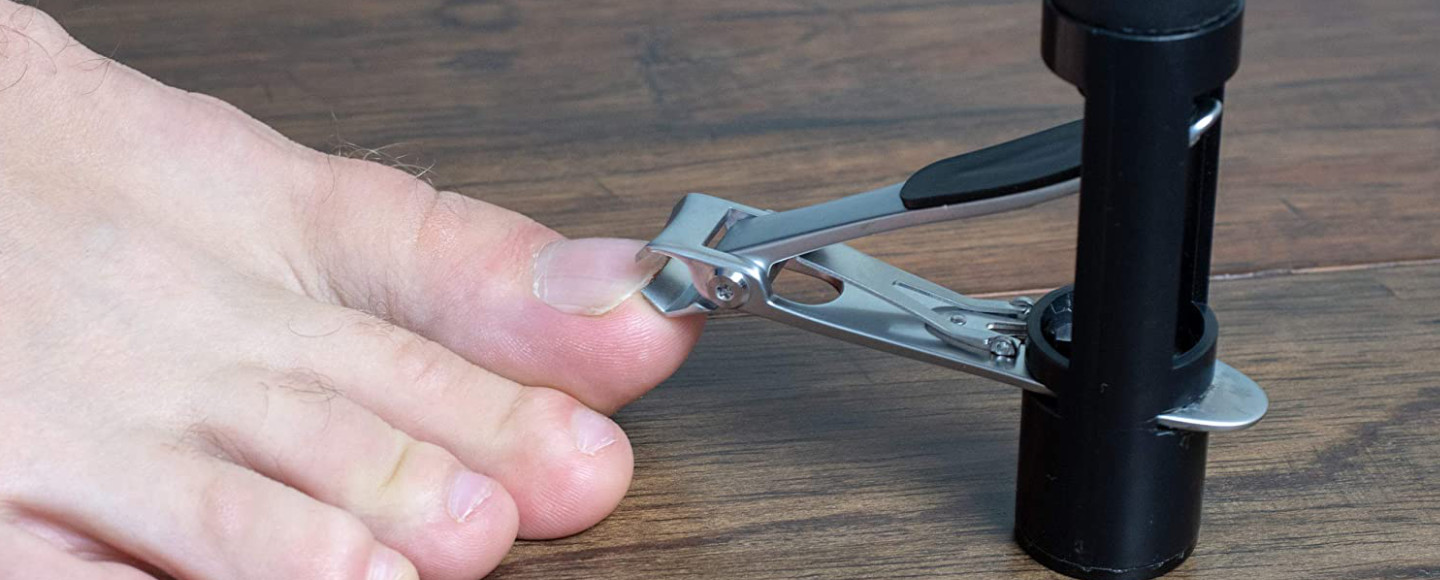
Best Long-Handle Toenail Clippers
Bending forward to reach toenails is genuinely difficult for many seniors — especially those with back pain, hip replacements, or reduced flexibility. Long-handle toenail clippers extend the reach by several inches, making it possible for many seniors to trim their own nails without help.
Why it works for seniors: These designs allow nail trimming without bending, which supports independence for seniors who can't comfortably reach their feet.
Best for: Seniors with limited flexibility, hip pain, or back pain.
Key features to look for: Handle length of at least 8 inches, non-slip grip, rotating or angled head for better visibility.
Arthritis-friendly: Choose designs with padded or contoured handles.
Safety note: Always check the clipper angle before using — an angled view of the nail ensures you're cutting straight.
Best Nail File for Elderly Nails
A good nail file is underrated. After trimming, filing removes sharp edges that can snag on socks, scratch skin, or catch uncomfortably inside shoes. For very thick nails that are hard to clip, a coarse file or emery board can also help gradually reduce thickness.
Why it works for seniors: Easy to use, requires minimal grip strength, and finishes the job that clippers start.
Best for: Post-clipping smoothing, and for seniors whose nails are too hard to cut without professional tools.
Key features to look for: Medium-to-coarse grit for thick nails, cushioned handle, dual-sided design.
Best Antifungal Toenail Treatment
For seniors dealing with discolored, thickened, or crumbling toenails, an over-the-counter antifungal treatment is often the first step toward healthier nails. These products work by gradually penetrating the nail and reducing fungal activity.
Why it works for seniors: Easy to apply, available without a prescription, and can meaningfully improve the appearance and thickness of affected nails over several months.
Best for: Early to moderate fungal nail infections.
Key features to look for: Brush-on applicator for precision, clinically tested active ingredients (undecylenic acid or tea tree oil for OTC options), clear formula.
Honest note: Fungal nail infections respond slowly — consistent daily use over several months is usually needed to see results. Severe infections may need prescription treatment.
Best Foot Soak for Thick Toenails
A good foot soak does more than soften nails before trimming. The right formula also soothes tired, aching feet, helps control foot odor, and can have mild antifungal properties.
Why it works for seniors: Warm water soaks naturally soften thick nails, making them significantly easier and safer to trim — while also providing genuine comfort for sore feet.
Best for: Pre-trimming softening routine; seniors with tired, swollen, or aching feet.
Key features to look for: Epsom salt base, gentle formula without harsh chemicals, skin-soothing additions like lavender or tea tree.
Safety note: Seniors with diabetes should use warm (not hot) water and limit soaking time to 10–15 minutes. Check with a doctor if there are any open wounds or foot ulcers.
Best Moisturizer for Aging Feet
Dry, cracked skin around the heels and toenails isn't just uncomfortable — it creates small openings in the skin that can lead to infection. A good foot cream, applied daily, is one of the simplest and most effective things a senior can do for foot health.
Why it works for seniors: Aging skin produces less natural oil. A rich foot cream restores moisture, reduces cracking, and keeps the skin around the nails supple and healthy.
Best for: Dry, cracked heels; dry skin around the toenails; general daily foot care.
Key features to look for: Urea content (10–25% for hard skin), fragrance-free formula for sensitive skin, fast-absorbing formula.
Application tip: Apply after the foot care routine, before putting on socks. Avoid applying between the toes.
Professional Nail Care for Elderly Seniors
There's no shame in deciding that professional nail care is the right choice — for yourself or for someone you care for. In fact, for many seniors, it's genuinely the safest option. A professional who specializes in geriatric foot care brings the right tools, training, and experience to handle nails that would be risky to manage at home.
What Is Professional Nail Care for Elderly Adults?
There are several types of professional nail services for elderly adults, ranging from medical to wellness-focused:
- Podiatrist (DPM): A doctor specializing in foot health. Podiatrists can treat ingrown nails, fungal infections, diabetic foot concerns, and perform medical nail care. This is the appropriate choice for any nail concern with a medical component.
- Medical pedicure: Performed by a trained professional (sometimes a podiatric nurse or foot care specialist), medical pedicures address nail thickness, calluses, and skin health — with a clinical rather than cosmetic focus.
- Mobile foot care nurse: Some trained nurses specialize in in-home foot care for elderly clients. They come to the senior's home, providing nail trimming, skin care, and foot assessment in familiar, comfortable surroundings.
- In-home nail trimming services: Some home care agencies include nail trimming as part of their personal care services. This is a practical option for seniors who already receive in-home support.
Toenail Cutting Service for Elderly Seniors
A dedicated toenail cutting service for elderly clients is more widely available than many people realize. These services typically include trimming, filing, and basic foot inspection — all performed by someone experienced with the unique challenges of elderly nail care.
What these services include: Nail trimming, filing, cuticle care, foot inspection, and often basic moisturizing. Some services also address calluses and corns.
Who benefits most: Seniors who cannot safely perform their own nail care, those with significant nail conditions, diabetic seniors, and seniors whose caregivers feel uncertain about trimming nails safely.
Typical cost: In-home foot care visits typically range from $40 to $100 per visit, depending on location and service scope. Podiatry visits are higher but may be partially covered.
Medicare and insurance: Medicare Part B may cover podiatric nail care when there is a documented medical need — such as diabetes, peripheral arterial disease, or a condition that makes self-care unsafe. It's worth calling your insurance provider or asking your doctor's office about what's covered in your specific situation.
When to See a Podiatrist Immediately
Some nail and foot concerns require prompt medical attention. Don't wait with any of the following:
- Bleeding from the nail or surrounding tissue that doesn't stop with gentle pressure
- Signs of infection — redness, warmth, swelling, pus, or worsening pain
- Black or dark brown toenails that haven't resulted from an obvious injury (this can indicate a blood pool under the nail, or in rare cases, something that needs medical evaluation)
- Any foot wound in a diabetic senior — even a small one. Diabetic foot wounds are a medical situation, not a wait-and-see one.
- Severely ingrown nails that are showing signs of infection or haven't responded to gentle home care
- Significant swelling, redness, or warmth in the foot or lower leg alongside nail changes
If in doubt, it's always better to call a doctor's office and describe what you're seeing. A five-minute phone call can give you clarity — and peace of mind.
Elderly Toenail Fungus Treatment Options
Toenail fungus is extremely common in older adults — estimates suggest that nearly half of people over 70 have some degree of fungal nail infection. The good news is that it's treatable. The key is recognizing it early and being consistent with treatment.
Signs of Toenail Fungus in Seniors
Toenail fungus in elderly adults doesn't always look the same. Watch for any combination of these signs:
- Yellow, brown, or white discoloration of the nail
- Thickened or unusually hard nails
- Crumbling or brittle edges that break off easily
- An unpleasant odor from the affected toenail
- The nail beginning to separate from the nail bed
- White powdery or chalky areas on the nail surface
In seniors with reduced circulation or sensation in the feet, a fungal infection can progress further before it's noticed — which is another reason why regular foot inspection is so valuable.
Best Elderly Toenail Fungus Treatment Options
There's a range of treatment options available, from mild home remedies to medical interventions:
Over-the-counter antifungal products: Topical antifungal creams, solutions, and nail lacquers are available without a prescription. They work best for mild to moderate infections and need to be applied consistently — often daily for several months. Look for products containing undecylenic acid, clotrimazole, or tea tree oil.
Prescription antifungal medications: For moderate to severe infections, a podiatrist or GP can prescribe oral antifungal medications such as terbinafine or itraconazole. These are significantly more effective than topical treatments alone but do come with side effect considerations — particularly relevant for seniors taking multiple medications. A doctor can advise on whether they're appropriate.
Prescription antifungal nail lacquers: Ciclopirox nail lacquer is applied like nail polish and works by penetrating the nail plate. It's a gentler option compared to oral medications and can be a good middle ground for seniors who aren't suitable candidates for oral antifungals.
Laser treatment: A newer option available through some podiatry clinics, laser treatment targets the fungus beneath the nail plate without affecting surrounding tissue. It's generally well-tolerated and doesn't require medication. Cost varies significantly and isn't always covered by insurance.
Home remedies (with realistic expectations): Diluted tea tree oil, white vinegar soaks, and Vicks VapoRub are popular home remedies with some anecdotal and limited clinical support. They're very unlikely to clear a significant infection on their own, but may help as a complementary measure or for very early-stage discoloration. Always discuss with a doctor before using home remedies alongside prescribed treatment.
How to Prevent Toenail Fungus in Elderly Adults
Prevention is genuinely easier than treatment when it comes to toenail fungus. These daily habits make a meaningful difference:
- Keep feet dry. After bathing or washing feet, dry thoroughly — especially between the toes. Fungus thrives in moisture.
- Change socks regularly. Fresh socks daily, or more often if feet tend to sweat. Moisture-wicking fabrics help.
- Avoid walking barefoot in shared spaces. Public showers, pool areas, and locker rooms are common environments for fungal transmission.
- Disinfect nail care tools regularly. Clean clippers and files with rubbing alcohol before and after use. Never share tools.
- Choose breathable footwear. Shoes made with natural or breathable materials help reduce foot moisture throughout the day.
- Treat athlete's foot promptly. Athlete's foot (tinea pedis) is caused by the same family of fungi as toenail infections. Treating it early reduces the risk of it spreading to the nails.
Nail Care Tips for Seniors With Diabetes, Arthritis & Limited Mobility
Certain health conditions require specific adjustments to the standard nail care routine. Here's what to know for the most common situations.
Diabetic Toenail Care Safety Tips
Diabetic toenail care is one area where extra caution is genuinely non-negotiable. Diabetes can reduce sensation in the feet (peripheral neuropathy) and impair circulation — meaning small injuries may not be felt, and minor wounds may heal very slowly or not at all.
Key guidelines for diabetic foot and nail care:
- Inspect feet daily. Check the soles, between toes, and around the nails for any redness, blisters, cuts, or changes in skin color. Using a mirror or asking for help makes this easier.
- Never cut calluses yourself. Hard skin (calluses and corns) around the toes and nails should only be treated by a podiatrist in diabetic seniors.
- Use only warm (not hot) water for soaking. Reduced sensation means it's easy to accidentally use water that's too hot. Test the temperature with your elbow or a thermometer.
- Keep trimming conservative. Don't cut nails shorter than necessary. Leave a small margin of nail beyond the skin to minimize any risk of ingrown edges.
- See a podiatrist regularly. Many diabetes management plans include routine podiatry visits. If yours doesn't, it's worth asking about adding this.
Nail Care for Seniors With Arthritis
Arthritis affects grip strength, joint flexibility, and hand control — all of which directly impact the ability to perform nail care safely. The right tools make an enormous difference here.
- Easy-grip and ergonomic nail clippers are designed with wider, contoured handles that require less pinching force. These are widely available and genuinely helpful.
- Electric nail trimmers are ideal for seniors with moderate to severe arthritis — they require essentially no grip or squeeze at all.
- Long-handle tools reduce the need to bend and reach, which helps seniors with both arthritis in the hands and stiffness in the back or hips.
- Caregiver assistance should be considered for seniors whose arthritis makes safe nail trimming genuinely difficult. There's no point in struggling through a task that someone else can do safely and comfortably.
Nail Care for Bedridden or Mobility-Limited Seniors
For seniors who are bedridden or have very limited mobility, standard home nail care routines simply may not be possible. This is when professional in-home care becomes most valuable.
- In-home foot care services — nurses, podiatrists, or personal care aides who visit the home — are the most practical solution. Many can be arranged through a GP referral, home care agency, or directly through a private foot care service.
- Foot positioning matters. When trimming the nails of a bedridden senior, position the foot comfortably using a rolled towel or pillow for support. Never force a limb into an uncomfortable angle.
- Infection prevention is heightened. Seniors who are less mobile are often less able to notice early foot problems. More frequent inspection — by a caregiver or nurse — helps catch issues early.
Frequently Asked Questions
How often should elderly toenails be cut?
For most seniors, toenails should be trimmed every 6 to 8 weeks. However, the rate of nail growth slows with age, so some individuals may find that every 8 to 10 weeks is sufficient. The key is not to let nails grow so long that they cause discomfort in shoes or increase the risk of catching and tearing. Regular inspection in between trimmings helps catch any issues early.
Why do elderly toenails become thick?
Toenail thickening in elderly adults (called onychauxis) has several common causes: the natural slowing of nail growth that comes with aging, fungal nail infection, repeated pressure or trauma to the nail over many years, reduced circulation to the feet, and certain skin conditions like psoriasis. In many cases, thickening is caused by a combination of factors. A podiatrist can help identify the underlying cause and recommend the most appropriate treatment.
Can seniors cut their own toenails safely?
Many seniors can safely cut their own toenails with the right tools and technique. The main factors that make self-trimming risky are: being unable to bend down comfortably, having poor eyesight that makes precise trimming difficult, having diabetes or neuropathy (reduced sensation), and having toenails that are extremely thick or abnormal in shape. If any of these apply, professional nail care is the safer option.
What is the best way to soften thick toenails?
Soaking feet in warm water for 10–15 minutes before trimming is the most reliable way to soften thick toenails. Adding Epsom salt or a few drops of tea tree oil can enhance the softening effect slightly. For very thick or hard nails, a specific foot soak product designed for thick nails can make a real difference. Some people also find that applying a urea-based foot cream to the nails each night gradually softens them over time.
Does Medicare cover toenail cutting for seniors?
Medicare Part B may cover routine foot care — including nail trimming — when it's performed by a podiatrist and there is a documented medical condition that makes self-care unsafe or risky. Qualifying conditions typically include diabetes, peripheral arterial disease, neurological conditions, and others that increase the risk of complications from foot care. Coverage isn't automatic, so it's best to confirm with your podiatrist and insurance provider what will be covered in your specific situation before the appointment.
What causes yellow toenails in elderly adults?
Yellow toenails in elderly adults are most commonly caused by fungal infection (onychomycosis) — the nail plate takes on a yellowish hue as fungal organisms colonize it. Other causes can include: long-term use of certain nail polishes (which can stain the nail), respiratory conditions (in a specific rare syndrome called Yellow Nail Syndrome), lymphatic issues, or simply the natural yellowing that some nails develop with age and reduced circulation. A podiatrist or doctor can examine the nail and recommend appropriate testing or treatment.
Are medical pedicures safe for seniors?
Yes — medical pedicures are generally very safe for seniors and are specifically designed with older adults and people with health conditions in mind. Unlike standard salon pedicures, medical pedicures are performed by trained professionals who know how to handle fragile skin, thickened nails, and conditions like diabetes or circulation issues safely. They focus on foot health rather than cosmetics, and the tools and environment are held to higher hygiene standards.
When should thick toenails be treated by a doctor?
Thick toenails should be evaluated by a podiatrist when they are too hard to cut safely at home, when they are causing pain inside shoes, when there are signs of infection (redness, swelling, discharge, or odor), when the nail is lifting away from the nail bed, or when the senior has diabetes or circulatory problems. A podiatrist can also diagnose whether the thickness is due to fungal infection and recommend appropriate treatment, which may include topical antifungals, prescription medication, or specialist procedures.
Final Thoughts
Proper elderly toenail care is one of those small, consistent habits that quietly supports everything else — comfortable walking, confident balance, a reduced risk of falls, and the kind of day-to-day physical comfort that makes life easier.
If you're a senior reading this, know that many of the challenges that come with aging nails are very manageable — with the right tools, the right routine, and the willingness to ask for help when it's genuinely needed. There's no reward for struggling through a task that a better pair of clippers, a warm foot soak, or a professional foot care visit could make much simpler.
If you're a caregiver, your attention to this often-overlooked area of your loved one's health matters more than you might realize. Nail care isn't glamorous, but it's meaningful. It affects how someone walks, how they feel in their shoes, and whether minor issues become major ones. Your consistency with it is a genuine act of care.
Start with the basics: a good foot soak, quality toenail clippers suited to your needs, and a regular trimming schedule. If anything looks uncertain — thickened nails, discoloration, signs of infection, or difficulty managing at home — reach out to a podiatrist or foot care professional. That's what they're there for.
Your feet carry you through every day. They deserve a little attention.