If opening a can of soup has started to feel like a workout, you're not alone — and you're not doing anything wrong. As hands change with age, ordinary kitchen tools can turn into daily frustrations. The good news? The right manual can opener for seniors can bring that simple task back to being, well, …

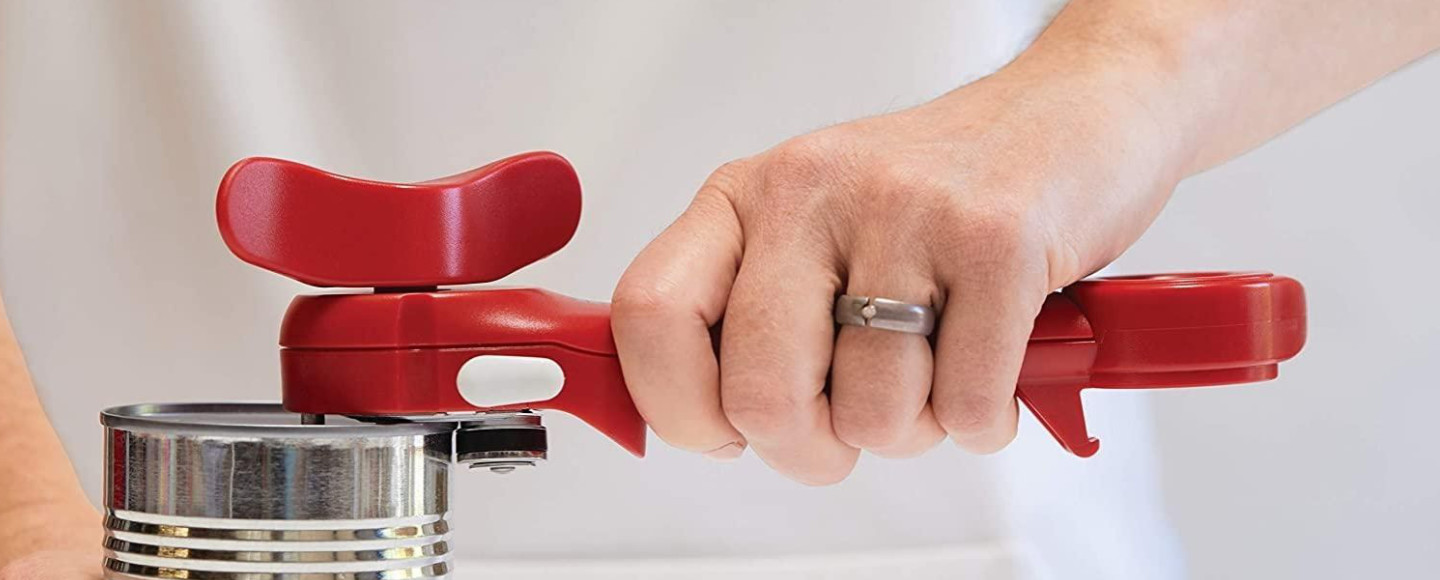
If opening a can of soup has started to feel like a workout, you're not alone — and you're not doing anything wrong. As hands change with age, ordinary kitchen tools can turn into daily frustrations. The good news? The right manual can opener for seniors can bring that simple task back to being, well, simple.
In this guide, we're going to walk through this the way we'd talk about it over coffee. No jargon, no hype, no pretending every product on the market is “the best.” Just a clear, honest look at which manual can openers actually make sense for arthritic hands, weak grip, or limited dexterity — and which ones to skip.
If you're an adult child shopping for a parent who's mentioned their hands “just don't work the way they used to,” this guide is for you too. We'll flag exactly which picks make the best gift for someone dealing with mobility changes, and which ones are worth avoiding no matter how nice they look in the store.
Why Can Openers Get Harder to Use With Age
This isn't about strength alone. A few common, very normal changes make traditional can openers frustrating:
- Arthritis and painful finger joints — squeezing small handles can genuinely hurt
- Weak grip strength — many standard openers assume a firm, sustained grip
- Limited hand dexterity — fine motor tasks like aligning a wheel become harder
- Difficulty turning small knobs — tiny knobs require more torque than they look like they should
- Wrist pain or reduced rotation — the repetitive twisting motion can be uncomfortable
A well-designed manual can opener should ask less of your hands — less squeezing, less twisting, less force — while still opening the can cleanly and safely. That's the standard we held every product to in this roundup.
Quick Comparison: Best Manual Can Openers for Seniors
Here's the short version, if you're in a hurry. Each pick includes our Senior-Friendly Score — a simple rating we created specifically for this audience, because a generic 5-star average doesn't tell you whether a product is actually gentle on arthritic hands.
| Can Opener | Best For | Squeeze Force | Knob Resistance | Edge Safety | Key Feature |
|---|---|---|---|---|---|
| OXO Good Grips Smooth Edge | Best Overall | Low | Low | Smooth (no sharp edge) | Side-cut mechanism, giant turning knob |
| EZ-DUZ-IT Deluxe | Arthritis | Low–Med | Low | Standard | Long handles for extra leverage |
| Chef'n EZ'Squeeze | Weak Hands / Ratchet | Low | N/A (ratchet) | Standard | Pump motion, no continuous twisting |
| Swing-A-Way Easy Crank | Easy-Grip / Large Knob | Med | Low | Standard | Foldable long-arm crank |
| Kuhn Rikon Auto Safety | Budget Pick | Low | Low | Standard | Auto-locks onto rim, no squeezing to start |
| Brix JarKey / Bartelli 3-in-1 | Limited Dexterity | Low | Low | Smooth | Multi-tool with pull-tab lifter |
| Nogent Super Kim | Compact / Travel | Med | Med | Standard | Ultra-lightweight, minimal storage space |
(Prices and availability change — click through for current pricing.)
🛒 [Check Price on Amazon]
Now let's walk through each one in detail, including who it's genuinely best for — and who might want to look elsewhere.
Our Top Picks for the Best Manual Can Opener for Seniors
Before we get into it, a quick note on how we approached this list: we didn't just pick the highest-rated products on Amazon. We specifically looked for openers that reduce squeeze force, reduce wrist rotation, and minimize sharp edges — because for this audience, those three things matter more than speed or looks.
1. OXO Good Grips Smooth Edge Can Opener — Best Overall
Senior Score: Squeeze Force: Low | Knob Resistance: Low | Edge Safety: Smooth
This is our top pick, and honestly, it wasn't close. The OXO Good Grips Smooth Edge opener cuts along the side of the can rather than the top — which means it separates the lid from the can entirely, leaving no sharp metal rim on either piece. That single design choice quietly removes one of the biggest hidden dangers of a “regular” can opener.
Why it wins:
- The turning knob is large, soft, and textured — easy to grip even with damp or arthritic hands
- Cushioned, oversized handles reduce the pressure needed to keep the opener steady
- The smooth-edge cut means no jagged lid, no sharp can rim, and no risk of a surprise cut while reaching into a cupboard later
Arthritis friendliness: Exceptional. The cushioned grips absorb pressure instead of digging into your fingers, and the mechanism doesn't demand a firm, sustained squeeze to work.
Arthritis Alert: Traditional top-cutting openers leave a sharp lid and a sharp can rim behind. If anyone in the household has reduced sensation in their fingertips — common with diabetes or neuropathy — a smooth-edge design like this one meaningfully lowers the risk of an unnoticed cut.
Pros:
- Genuinely low-effort operation
- No sharp edges on lid or can
- Comfortable for extended kitchen use
Cons:
- Slightly bulkier than compact options — not ideal for very small drawers
- Costs a bit more than basic openers
Best for: Seniors who want the single easiest, safest all-around option — and anyone buying a gift for a parent who's mentioned hand pain.
🛒 [Check Price on Amazon]
2. EZ-DUZ-IT Deluxe Can Opener — Best for Arthritis
Senior Score: Squeeze Force: Low–Medium | Knob Resistance: Low | Edge Safety: Standard
This one's been a favorite in the arthritis community for years, and it's easy to see why. The EZ-DUZ-IT is built with heavy-duty steel and unusually long handles, which gives you real mechanical leverage — meaning your hands do less work to get the same result.
Focus on painful or stiff hands:
- The long handles mean you're using arm and hand position to your advantage, not just finger strength
- Rubberized grips prevent slipping, so you're not compensating with extra squeeze
- The turning mechanism moves smoothly without catching, so you're not forcing anything
How much force is required: Noticeably less than a standard opener, largely thanks to the extended handle leverage. It won't feel effortless if your grip strength is very limited, but for moderate arthritis, this is one of the gentlest mechanical designs available.
Pros:
- Sturdy, built-to-last construction
- Leverage-based design genuinely reduces hand strain
- Trusted, long-standing reputation in the arthritis community
Cons:
- Not the most compact option for storage
- Standard cutting edge, not a smooth-edge design
Best for: Seniors with moderate arthritis who want a time-tested, no-nonsense workhorse.
🛒 [Check Price on Amazon]
3. Chef'n EZ'Squeeze One-Handed Can Opener — Best for Weak Hands (Ratchet Style)
Senior Score: Squeeze Force: Low | Mechanism: Ratchet (no continuous twisting) | Edge Safety: Standard
Here's a design most people haven't tried: instead of turning a knob in a continuous circle, this opener works with a simple squeeze-and-release pumping motion. For anyone with wrist pain or limited rotation, that difference is bigger than it sounds.
Why leverage matters here: A standard opener asks your wrist to rotate again and again in the same direction — which can be genuinely painful with arthritis or past wrist injuries. This one swaps that motion for a repeated light squeeze, which most people find far more comfortable to sustain.
Consider this if: you or a loved one struggles specifically with turning knobs or twisting motions, even if grip strength itself is okay. It's also genuinely operable with one hand, which matters more than people expect until they need it.
Pros:
- No continuous wrist twisting required
- Comfortable for people with limited wrist rotation
- Can be operated largely one-handed
Cons:
- Takes a little getting used to if you're set in your ways with a traditional opener
- Slightly more moving parts to clean
Best for: Seniors with wrist impairment or anyone who's found “regular” openers painful specifically because of the twisting motion, not just the squeezing.
🛒 [Check Price on Amazon]
4. Swing-A-Way Portable Can Opener with Easy Crank — Best Easy-Grip / Large Knob
Senior Score: Squeeze Force: Medium | Knob Resistance: Low | Edge Safety: Standard
The Swing-A-Way has been a kitchen-drawer staple for generations, and this version adds a foldable, long-arm crank handle that works like a lever multiplier — the longer the crank, the less effort each turn takes.
What makes it easy:
- Large turning knob offers a bigger surface to grip
- Comfortable handles that don't dig into fingers
- Non-slip grip keeps it steady mid-crank
Ease of cleaning: Simple, exposed design with no hidden mechanisms — a quick wipe-down after use is usually enough.
Pros:
- Familiar, easy-to-learn design
- The extended crank arm noticeably reduces turning effort
- Reasonably priced for the quality
Cons:
- Slightly more hand strength needed to get started than our top two picks
- The folding crank arm can loosen over time with heavy use
Best for: Seniors who still have decent hand strength but want to reduce ongoing wrist strain.
🛒 [Check Price on Amazon]
5. Kuhn Rikon Auto Safety Can Opener — Best Budget Pick
Senior Score: Squeeze Force: Low | Knob Resistance: Low | Edge Safety: Standard
Don't let the price fool you — this Swiss-designed opener includes a clever feature that's usually reserved for pricier models: it automatically locks onto the can rim, so you never have to squeeze the handles together just to get started.
Whether the lower price compromises ease of use: In this case, not really. The auto-locking mechanism is the exact feature that matters most for weak hands, and it's included here at a genuinely accessible price point.
Pros:
- No squeezing required to attach it to the can
- Compact and easy to store
- Excellent value for the features included
Cons:
- Handles are a bit smaller than our top picks — not ideal for significant hand pain
- Basic aesthetic compared to premium options
Best for: Budget-conscious shoppers who still want the “auto-lock” convenience without paying a premium.
🛒 [Check Price on Amazon]
6. Brix JarKey / Bartelli Soft-Grip 3-in-1 Ambidextrous Opener — Best for Limited Dexterity
Senior Score: Squeeze Force: Low | Knob Resistance: Low | Edge Safety: Smooth
This is our pick for anyone dealing with more significant dexterity challenges. It's built with wide, ambidextrous handles (so it works the same whether you're left- or right-handed) and minimal moving parts — which means fewer small pieces to align or fumble with.
Minimal hand movements: The design intentionally reduces the number of steps between “pick it up” and “can is open.” It also doubles as a pull-tab lid lifter and jar opener, which is a nice bonus for anyone who finds multiple kitchen tools frustrating, not just can openers.
Stability while opening cans: Wide handles and a low center of gravity keep it from wobbling mid-use, which matters if hand tremors or reduced fine motor control are a factor.
Pros:
- Multi-tool functionality reduces the number of gadgets needed
- Ambidextrous design works for either hand
- Minimal, simple moving parts
Cons:
- Not as fast as dedicated single-purpose openers
- Some users need a moment to learn the multi-tool functions
Best for: Seniors with significant dexterity limitations, or caregivers who want one simple tool that handles several small kitchen tasks.
🛒 [Check Price on Amazon]
7. Nogent Super Kim Manual Can Opener — Best Compact / Travel
Senior Score: Squeeze Force: Medium | Knob Resistance: Medium | Edge Safety: Standard
For smaller kitchens, or seniors who split time between two homes, this ultra-lightweight French-designed opener takes up almost no drawer space and locks onto the can securely with a simple single-handle motion.
Whether the smaller size affects usability: Slightly — this isn't the easiest opener on our list for significant hand pain, since it requires a touch more grip strength than our top picks. But for someone with mild-to-moderate hand fatigue who just wants something compact and reliable, it's a solid, no-fuss option.
Pros:
- Extremely compact and lightweight
- Locks on securely with one motion
- Great for travel, RVs, or small kitchens
Cons:
- Requires more hand strength than our other picks
- Not the best choice for moderate-to-severe arthritis
Best for: Seniors who are still fairly capable with their hands but want something small, simple, and easy to store.
🛒 [Check Price on Amazon]
What Makes a Manual Can Opener Easy for Seniors to Use?
Now that you've seen our picks, let's talk about why these features matter — so you can evaluate any can opener with confidence, even ones we haven't reviewed here.
Large, Comfortable Handles
Small handles concentrate pressure into a tiny area of your fingers, which is exactly where arthritis tends to hurt most. Wide, ergonomic grips spread that pressure out, making the same amount of force feel like far less effort.
Easy-Turn Knob
The turning knob does most of the actual work. A bigger knob gives your fingers more surface area to push against, which means less torque is needed from your joints to get the same result.
Low-Force Operation
A genuinely senior-friendly can opener shouldn't require a hard, sustained squeeze just to clamp onto the can. If a product description brags about being “heavy-duty” without mentioning ease of grip, that's often a sign it was designed for strength, not comfort.
Non-Slip Grip
If an opener slips mid-turn, most people instinctively squeeze harder to compensate — which defeats the whole purpose. A textured, non-slip grip means you can use a light touch and trust it'll stay put.
Smooth Cutting Mechanism
The best openers cut in one smooth pass, without needing to be repositioned and restarted. Repositioning usually means re-squeezing the handles, which adds up to real strain over a can or two per meal.
Lightweight but Stable Design
There's a balance here — too light, and the opener can feel flimsy or wobble mid-use; too heavy, and it becomes tiring to hold steady. The openers on this list strike that balance well.
Safety First: Smooth-Edge vs. Traditional Can Openers
This is a section we think deserves more attention than most can-opener guides give it — because it's genuinely about safety, not just comfort.
Traditional top-cutting openers slice through the top of the can, which leaves behind two sharp metal edges: the removed lid, and the rim of the can itself. For most people, that's a minor annoyance. But for seniors with thin, fragile skin, reduced sensation from neuropathy or diabetes, or hand tremors, that sharp edge is a real and avoidable risk.
Smooth-edge (or “side-cut”) openers work differently. Instead of cutting through the top, they unseal the crimped seam along the side of the can, allowing the lid to lift off cleanly with a rounded edge — no jagged metal on the lid or the can.
Arthritis Alert: If reduced hand sensation is part of the picture — which is common with long-standing arthritis, diabetes, or neuropathy — a smooth-edge opener isn't just a nice-to-have. It removes a genuine injury risk that's easy to overlook until it happens.
Two of our top picks (the OXO Good Grips and the Brix JarKey/Bartelli 3-in-1) use this smooth-edge design, and we'd gently encourage prioritizing one of those two if safety is your main concern.
Best Manual Can Opener for Arthritic Hands: What Should You Look For?
Arthritis affects everyone a little differently, so it's worth breaking this down feature by feature rather than assuming one product fits all.
Look for:
- Oversized handles that distribute pressure across your whole hand rather than a few fingers
- Soft-touch grips that cushion pressure points
- Easy-turn knobs that require less torque per rotation
- Minimal squeezing to attach and operate
- Reduced wrist rotation — or, in the case of ratchet-style openers, no continuous rotation at all
- Lightweight construction that doesn't add fatigue over a long cooking session
- Comfortable hand positioning — test whether your wrist stays in a neutral position or gets twisted at an angle
One honest note: what works beautifully for one person's arthritis might not work as well for someone else. Joint pain location, flare frequency, and grip strength all vary. If possible, it's worth trying an opener in-store or buying from a retailer with an easy return policy before committing.
Specialized Options: Ratchet-Style and Multi-Tool Openers
Standard two-handle rotating can openers aren't the only manual option worth knowing about — and for some hand conditions, they're not even the best one.
Ratchet-Style Openers
Instead of a continuous 360-degree twist, ratchet-style openers (like our Chef'n pick above) work with a repeated squeeze-and-pump motion. This is worth strongly considering if wrist rotation specifically — not just grip strength — is the source of discomfort.
Multi-Tool / Jar-Opener Combos
Some openers, like the Brix JarKey and Bartelli 3-in-1, combine a can opener with a jar opener and pull-tab lifter in one tool. If the kitchen is already full of separate gadgets for separate small tasks, a combo tool can meaningfully cut down on clutter — and on the number of different grips someone has to learn and manage.
Manual vs. Electric Can Openers for Seniors
This is one of the most common questions we hear, so let's address it directly and honestly.
| Feature | Manual Can Opener | Electric Can Opener |
|---|---|---|
| Electricity required | No | Usually yes/battery |
| Storage | Easy | Larger |
| Portability | Excellent | Moderate |
| Hand effort | Moderate to low | Very low |
| Arthritis-friendly | Depends on design | Often excellent |
| Price | Usually lower | Usually higher |
When is a manual opener the better choice?
- You want something inexpensive and simple
- You'd rather not deal with batteries, cords, or charging
- You have enough hand strength for a well-designed ergonomic manual opener
- You want something compact that's easy to store or travel with
When might an electric opener be better?
- Hand pain is severe or grip strength is very limited
- Turning knobs of any size has become genuinely difficult
- Holding objects steady with one hand is a challenge
- You'd simply prefer to remove hand effort from the equation entirely
If any of those second points sound familiar, it may be worth exploring our guide to the [Best Electric Can Openers for Seniors] — a fully hands-off option that some seniors find easier long-term, even if it costs a bit more upfront.
How We Chose the Best Manual Can Openers for Seniors
We didn't just pull a list of best-selling products and call it a day. Every opener on this list was evaluated against ten specific factors that matter most for aging hands:
- Ease of use — can it be operated without frustration on the first try?
- Grip comfort — do the handles feel good to hold, even for extended use?
- Required hand strength — how much force does the mechanism actually demand?
- Turning effort — how much torque is needed per rotation?
- Arthritis-friendliness — does the design actively reduce strain on joints?
- Cutting performance — does it cut cleanly in one pass?
- Build quality — will it hold up to daily use without loosening or breaking?
- Ease of cleaning — can it be wiped down or rinsed without a hassle?
- Safety — does it leave sharp edges, and how well does it grip the can?
- Value for money — does the price match the quality and features?
What We Paid Special Attention To
- Can the user operate it with one hand if needed?
- Is the knob genuinely easy to turn, or just marketed that way?
- Are the handles easy to squeeze without straining fingers?
- Does it slip during use, forcing a harder grip to compensate?
- Does it require repeated repositioning mid-cut?
- Is the cutting action smooth, or does it catch and stall?
We'd rather tell you honestly that a popular product isn't a great fit for arthritic hands than recommend it just because it sells well. That's the whole point of a guide like this.
How to Use a Manual Can Opener Safely
A few small habits make a real difference here, especially with reduced grip strength or sensation.
Place the Opener Correctly
Align the cutting wheel with the rim of the can before squeezing the handles closed. Taking an extra second here avoids a crooked cut that requires repositioning.
Keep Fingers Away From the Cutting Wheel
It sounds obvious, but it's worth saying: keep fingers clear of the blade area throughout the process, not just at the start.
Don't Force a Stuck Can
If the opener seems to be catching or struggling, stop and reposition rather than pushing through with extra force. Forcing it is one of the more common ways people get nicked.
Check the Can Edge After Opening
Even with a smooth-edge opener, it's a good habit to run a finger lightly along the rim (or simply look) before reaching in — especially with a traditional top-cutter, which can leave a genuinely sharp edge.
Clean and Dry the Opener After Use
Food residue left on the cutting wheel can attract bacteria and, over time, cause it to stick or rust — which makes future use harder, not easier.
Sharp can edges can cause real injuries, particularly for anyone with reduced sensation in their fingertips. These few habits go a long way toward making the whole process safer, not just easier.
How to Choose the Easiest Can Opener for Seniors
If you're comparing options beyond this list, here's a simple checklist to run through:
- ☐ Large, easy-to-grip handles
- ☐ Easy-turn knob with a wide surface
- ☐ Comfortable grip material (soft-touch, not bare plastic or metal)
- ☐ Non-slip surface
- ☐ Low hand pressure required to operate
- ☐ Smooth, single-pass cutting action
- ☐ Lightweight construction
- ☐ Easy to clean
- ☐ Comfortable for arthritis specifically, not just “ergonomic” in name
- ☐ Genuine reviews from users with hand limitations, not just general reviews
If a product checks most of these boxes, it's likely to be a good fit — even if it's not one of our specific picks above.
Frequently Asked Questions
What is the easiest manual can opener for seniors?
Based on our testing criteria, the OXO Good Grips Smooth Edge Can Opener is the easiest overall, thanks to its low squeeze force, oversized turning knob, and smooth-edge safety design. Easier operation generally comes down to three things: a large comfortable grip, a low-resistance turning mechanism, and minimal squeezing required to attach it to the can.
What is the best manual can opener for seniors with arthritis?
The EZ-DUZ-IT Deluxe stands out for arthritis specifically, thanks to its long-handle leverage design that reduces the force needed from your fingers. For wrist-specific pain, the ratchet-style Chef'n EZ'Squeeze is also worth strong consideration.
Are manual can openers good for arthritic hands?
Some are genuinely excellent, and others are genuinely painful to use — the difference comes down entirely to design. Look for low squeeze force, large handles, and smooth turning mechanisms rather than assuming all manual openers are equally difficult.
What type of can opener is easiest for elderly people?
For most people, a smooth-edge manual opener with a large knob (like our top pick) offers the best mix of low effort and safety. For those with very limited grip strength or dexterity, an electric can opener may be worth exploring instead.
What is the best hand can opener for seniors with weak hands?
Look for oversized handles and leverage-based designs, which do more of the work mechanically so your hands don't have to. Ratchet-style openers are also worth considering, since they trade continuous twisting for a lighter repeated squeeze.
Should seniors use a manual or electric can opener?
It depends on the individual. A well-designed manual opener works well for moderate hand limitations and offers more portability and a lower price. For severe grip weakness or significant hand pain, an electric opener may offer meaningfully less strain.
What features should I avoid in a can opener for arthritis?
Steer clear of:
- Tiny, hard turning knobs
- Thin, unpadded handles
- Stiff mechanisms that require significant force to engage
- Slippery plastic grips
- Designs that require a strong, sustained squeeze just to attach
Final Verdict: Which Manual Can Opener Is Best for Seniors?
Here's the quick recap:
- Best Overall: OXO Good Grips Smooth Edge Can Opener
- Best for Arthritis: EZ-DUZ-IT Deluxe Can Opener
- Best for Weak Hands / Ratchet Style: Chef'n EZ'Squeeze
- Best Budget Option: Kuhn Rikon Auto Safety Can Opener
- Best for Limited Dexterity: Brix JarKey / Bartelli 3-in-1
If you're shopping for yourself, our honest advice is this: comfort and ease of operation matter far more than having the cheapest option or the one with the most features. A $10 difference in price is easy to forget about — a can opener that hurts your hands every single day isn't.
If you're shopping for a parent or loved one, the OXO Good Grips Smooth Edge is a genuinely thoughtful, low-risk gift. It solves the comfort problem and the safety problem at once, which is a rare combination in a $15–$20 kitchen tool.
Whatever you choose, the goal is simple: a can of soup shouldn't be a fight. The right tool makes it one less thing to think about — and that, quietly, is worth a lot.
You Might Also Like
- [Best Electric Can Openers for Seniors] — for hands that need a fully hands-off option
- [Can Openers for Arthritis: A Complete Buying Guide]
- [Best Kitchen Gadgets for Seniors]
- [Best Kitchen Tools for Seniors With Arthritis]
- [Cut-Resistant Kitchen Gloves for Seniors] — a smart pairing if sensation or grip is limited
- [Arthritis-Friendly Kitchen Guide: Tools That Actually Help]